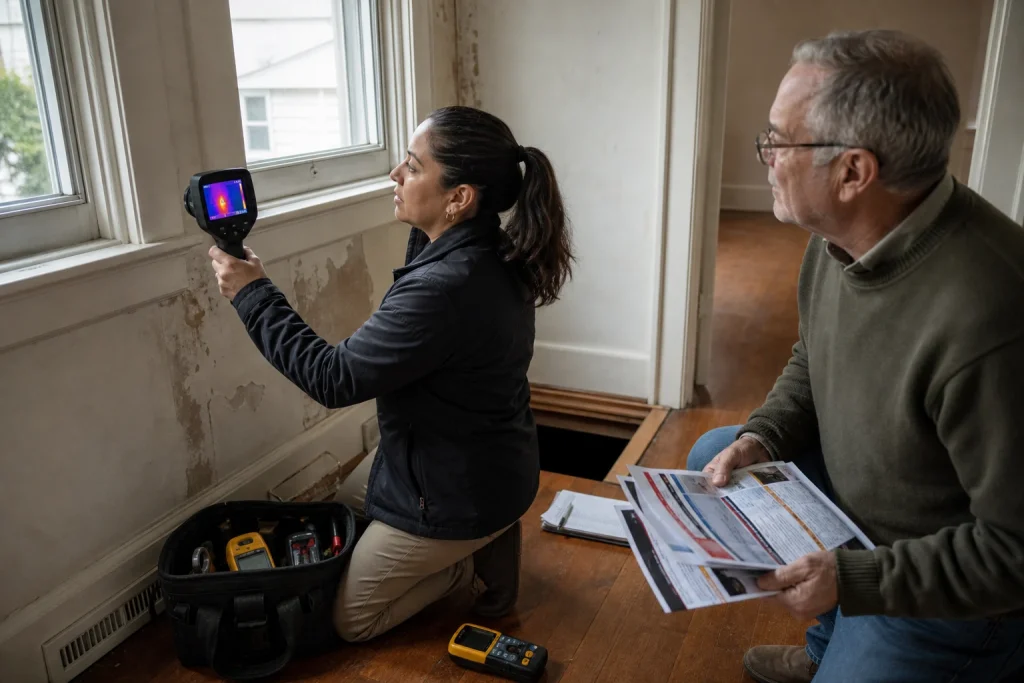
Which Home Improvement Should You Do First? Start With the Problem, Not the Product
A window salesperson sees windows. An HVAC company sees equipment. A remodeler sees finishes and layout. Each recommendation may be reasonable, but none begins with the neutral question a homeowner needs answered: what problem is the house actually asking you to solve first?
Sequence home improvements by consequence and diagnosis: safety first, active water or structural damage next, then the building envelope and major systems, and finishes after the underlying conditions are stable. Start with the complaint, not the product being offered.
First, separate hazards from annoyances
Unsafe electrical conditions, gas or combustion concerns, active structural movement, failed alarms, serious trip or fall hazards, and water entering the building deserve priority over comfort or appearance. A beautiful room does not compensate for a condition that can hurt someone or damage the work you just paid for.
If you suspect a serious hazard, use the appropriately qualified professional rather than treating the sequence as a DIY ranking exercise. Emergency conditions require immediate response.
Stop active damage before improving performance
A roof leak, plumbing leak, failed drainage, pest entry, or moisture problem can damage insulation, framing, flooring, and finishes. Fixing the visible stain without stopping the source simply hides the meter while the cost keeps running.
Document when and where the problem occurs. Rain direction, appliance use, seasonal temperature, and meter readings can help a professional distinguish the source from where the damage finally appears.
Diagnose comfort and energy complaints as a system
A cold room may involve air leakage, insulation, ductwork, equipment balance, moisture, solar exposure, or several of them together. Replacing windows because they are visible may miss less expensive leaks elsewhere.
ENERGY STAR recommends beginning with a home performance assessment and identifies air sealing and insulation as critical early efficiency steps. Its guide to sequencing home energy improvements then considers ducts, heating and cooling, appliances, windows, and renewable systems in context.
Plan projects in the order that avoids rework
Think about which project opens or covers another. Electrical, plumbing, structural, ventilation, or insulation work may need access behind the wall you plan to finish. Exterior drainage and roofing should be stable before repairing interior water damage.
Write dependencies beside each project. “Paint bedroom” may depend on “repair ceiling leak,” which depends on “diagnose flashing,” while “replace flooring” may need to wait until a plumbing change and moisture test are complete.
Let your life decide among equally sound projects
After hazards, damage, and dependencies are addressed, priorities become personal. Accessibility, a home office, another bedroom, lower operating cost, easier maintenance, or a functional kitchen may matter more to your household than a generic resale ranking.
You should consider how long you expect to stay, how the improvement changes daily life, what maintenance it adds, whether financing is needed, and what other work becomes possible or unnecessary afterward. Do not assume every project must justify itself through resale value alone.
Buy the diagnosis before the expensive solution
When several contractors recommend different products for the same complaint, an independent inspection, energy assessment, engineer, or specialist may be worth the cost. You are buying a clearer problem definition before committing to the most expensive answer.
The first home improvement should not be whichever advertisement found you first. It should be the project that removes the largest current risk, stops the greatest active damage, or unlocks the next work in the right order.
Live Minder Connect member business
D&R Landscape and Excavation
Services · Fort Pierce and service areas across Florida
D&R Landscape and Excavation provides land clearing, forestry mulching, excavation, grading, landscaping, irrigation, lawn maintenance, tree services, and storm cleanup across Florida.