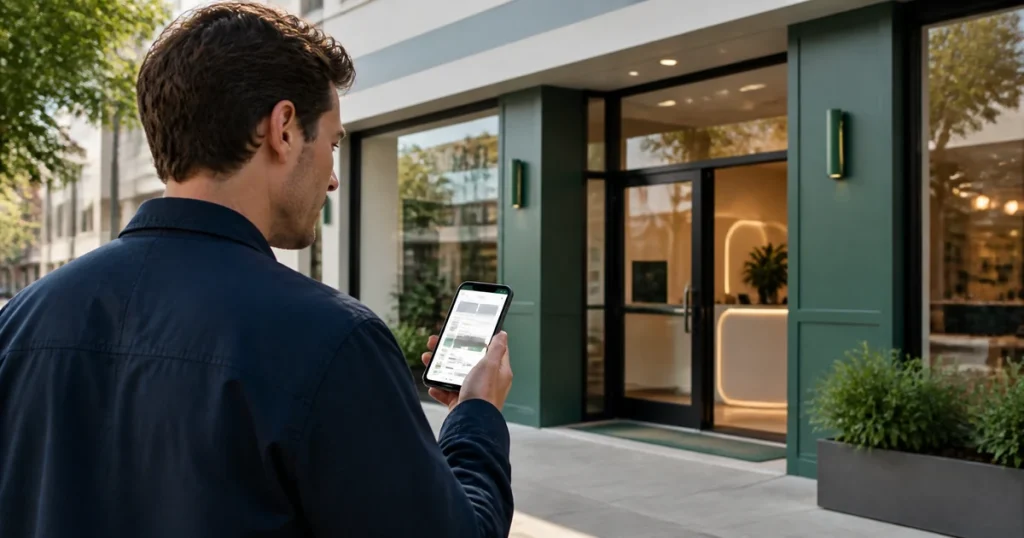
Close the Trust Gap Between Discovery and a First Dispensary Visit
A customer can discover a dispensary, like its menu, and still decide not to visit. The missing step is often trust: confidence that the store is legitimate, the information is current, the experience will be comfortable, and the trip will be worth making.
The trust gap is a collection of unanswered questions
First-time visitors quietly ask: Is this place open? Will I find what I need? Is parking straightforward? What identification is required? Will the staff make me feel uninformed? Does the actual store resemble the photos? Every missing or conflicting answer gives the person another reason to hesitate.
Customers need the store’s listings, the website, the menu, the reviews, the earned media, the phone experience, and the actual location to give them consistent information. A reassuring slogan won’t make up for conflicting details.
Audit the evidence a new customer sees
- Identity: name, address, phone number, hours, and storefront imagery agree everywhere.
- Fit: the menu and website make the store’s products, services, and customer promise easy to understand.
- Recency: recent photos, responses, updates, and inventory signals show that the business is active.
- Experience: reviews and first-visit information reduce anxiety without making unsupported promises.
- Arrival: directions, parking, accessibility, entry, and check-in are clear.
Google recommends complete and accurate Business Profile information so customers know what a business does, where it is, and when they can visit. Its local ranking guidance also identifies reviews and links as parts of prominence. The practical lesson is to make proof both credible and easy to verify.
Prioritize the gaps most likely to stop a visit
Don’t treat every inconsistency as equally urgent. Correct visit-stopping errors first, then improve the evidence around them.
- Critical: wrong hours, address, phone number, menu availability, entrance, or identification information.
- High friction: unclear parking, pickup, accessibility, check-in, payment, or first-visit expectations.
- Credibility: outdated photos, conflicting descriptions, neglected reviews, or claims with no visible proof.
- Enhancement: richer team stories, independent coverage, educational content, and additional proof of the store’s positioning.
If very few nearby customers are discovering the store at all, begin with the local foot-traffic plan. Use this trust audit when discovery is occurring but first visits aren’t keeping pace.
Replace vague claims with visible proof
Claims such as “best selection,” “premium service,” or “trusted dispensary” do little on their own. Show the real team, explain the buying experience, keep the menu accurate, respond professionally to reviews, and describe the store’s strongest difference in concrete terms.
Third-party coverage can add context because the business is no longer the only source describing itself. It should supplement, not replace, reliable owned information. A clear profile, interview, or store feature can help customers and search systems connect the company’s name with its people, location, and positioning.
Test the path as a first-time visitor
Search for the store from a phone without using a bookmarked link. Compare the listing, the website, the menu, the marketplace profiles, and the directions. Call with a basic first-visit question. Then approach the property as someone who has never been there. Record every inconsistency or moment of uncertainty, assign it one of the four priority levels above, and give the critical items an owner and correction date.
Start with the incorrect or missing details most likely to stop someone from visiting. The process aligns with our guide to what to fix before adding dispensary marketing channels. If customers are discovering the business but not arriving, more reach may simply send more people into the same trust gap.
Measure whether trust is turning into visits
Watch direction requests, calls, menu engagement, completed online orders, first-time visits, and the questions customers ask before arriving. Ask new buyers what nearly stopped them and what finally made them comfortable visiting. Their answers will tell you what still needs to be clearer or more reassuring before someone visits.
When evaluating directory or marketplace visibility, use the same standard. Our Weedmaps and Leafly evaluation guide can help determine whether those profiles are contributing useful discovery and confidence.
For dispensary operators
Give customers another trusted place to understand your dispensary
The mg Magazine Dispensary Spotlight helps you present your store, people, positioning, and customer experience inside an established cannabis-industry publication. It gives customers, search engines, AI systems, and industry readers another credible source for understanding what makes your dispensary different.
Want to work through the strategy first? Download the free guide, Why Customers Choose the Dispensary Down the Street.
Pingback: Turn Happy Customers Into a Dispensary Acquisition Channel
Pingback: How Dispensaries Become the First Choice Without Constant Discounts