Can You Drive a Specialty Vehicle on Public Roads? Check Before Buying
Golf carts, low-speed vehicles, kit cars, imported vehicles, off-road machines, and other specialty vehicles can be legal in one setting and prohibited in another. A seller may truthfully say that a vehicle is "street legal" where it is currently used while you remain unable to title, register, insure, or operate it where you live.
You should verify the legal category and paperwork with your own state and local agencies before paying. Adding lights, mirrors, or a seat belt doesn’t automatically convert every vehicle into a road-legal motor vehicle.
Identify what the vehicle legally is
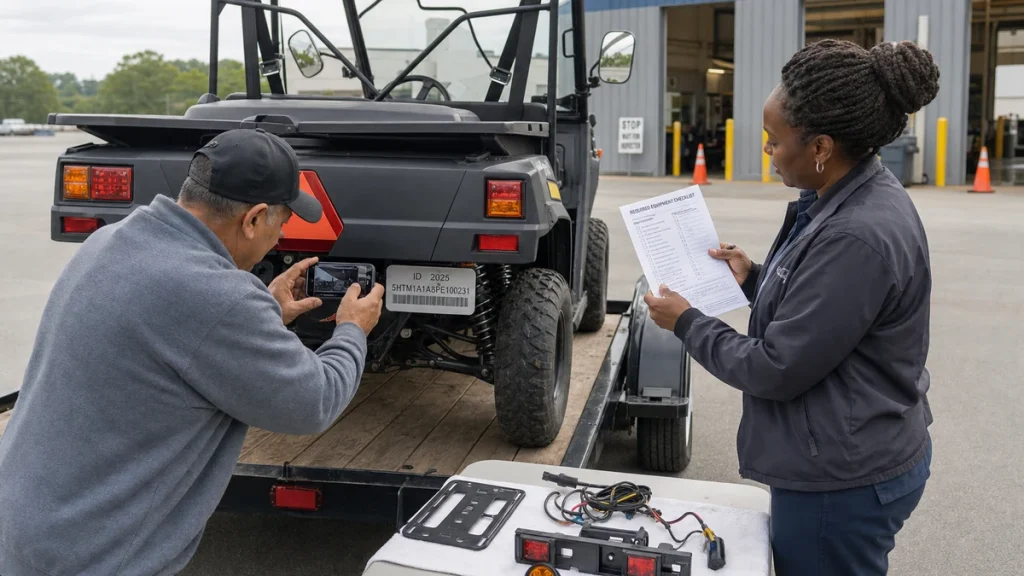
Ask for the manufacturer, the model, the model year, the VIN or other identification number, the certification label, the title, the registration, and the build or import documents. Then ask your motor-vehicle agency which legal class applies.
Terms such as golf cart, low-speed vehicle, neighborhood electric vehicle, off-highway vehicle, assembled vehicle, replica, and mini-truck can trigger different equipment rules, road restrictions, inspections, and title procedures. You should use the agency's definition, not the wording in an advertisement.
Verify where it may be operated
Road access may depend on speed limits, local ordinances, crossing rules, equipment, driver licensing, insurance, and time of day. Private communities, campuses, farms, industrial sites, trails, and public roads can each have different requirements.
The National Highway Traffic Safety Administration interpretation on low-speed vehicles illustrates that modifying a golf cart for public-road use can change which federal vehicle standards apply. State registration and local operation rules still need separate verification.
Do not buy an unresolved paperwork problem
Match every identification number to the ownership documents. Ask whether the vehicle is new, used, assembled, reconstructed, imported, or converted and whether any prior application for title or registration was rejected.
If the seller says the title is unnecessary, unavailable, or easy to obtain later, contact the agency before the sale. You should know the exact forms, the inspections, the receipts, the bonds, the taxes, and the component records required in your name.
Evaluate parts, service, and safe use
Specialty vehicles may use discontinued components, proprietary controllers, unusual tires, custom wiring, or parts from several manufacturers. Ask who can diagnose and repair the vehicle locally and whether manuals, software, batteries, chargers, keys, and replacement parts are available.
Confirm payload, passenger, speed, charging, towing, transport, braking, and terrain limits. A vehicle that is allowed on a road may still be a poor or unsafe match for the route, traffic, grade, weather, and crash exposure involved.
Questions to answer before buying
- What legal vehicle class will my state assign?
- Can I title, register, insure, and inspect this exact vehicle?
- Which roads, crossings, trails, or private areas may I use?
- Do the VIN, certification, and ownership documents match?
- Were modifications, imports, or prior title problems documented?
- Who provides local service and replacement parts?
- What safety, weight, speed, and operating limits apply?
- How will I legally transport it when it cannot be driven?
The safest time to discover a vehicle isn’t road legal is before it occupies your garage. A specialty vehicle can be an excellent fit, but only when its legal identity, intended environment, support, and paperwork are as real as the vehicle itself.