What Should You Check During Your First Month in a New Home?
The first month in a new home can disappear into paint colors, furniture placement, and the list of upgrades you promised yourself during the showing. Meanwhile, the most important things to learn are the parts of the house you hope you never need in a hurry.
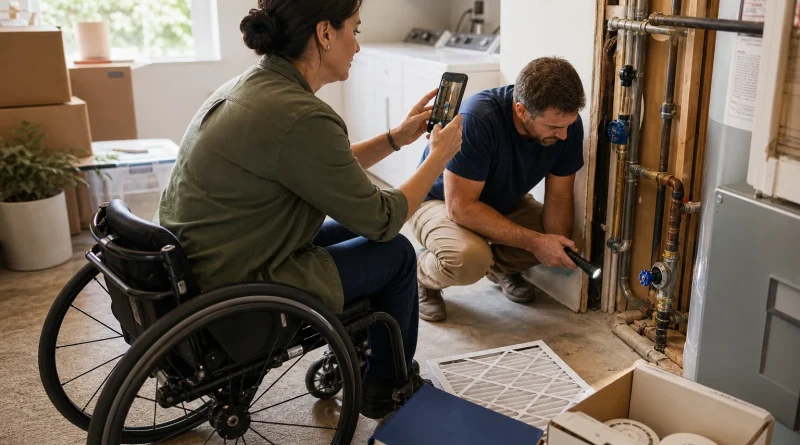
Before making the house prettier, build a safety and maintenance baseline. Find the shutoffs, test the alarms, look for active water problems, understand drainage and filters, and collect the records that explain what you now own.
Map the controls before something goes wrong
Locate and label the main water shutoff, electrical panel, gas shutoff if applicable, heating and cooling controls, water-heater controls, and any local fixture shutoffs. Make sure the electrical panel directory is understandable, but do not open energized equipment or operate a gas valve unless you know the proper procedure.
Ask everyone who is capable of responding to an emergency to learn the locations. A shutoff that only one traveling household member can find is not really part of the household’s safety plan.
Test the alarms and learn their age
Test smoke and carbon monoxide alarms, replace missing batteries, and check the manufacture or replacement date. Confirm that alarms are installed in the required locations for your home and local code.
Carbon monoxide cannot be seen or smelled. The Consumer Product Safety Commission recommends alarms on every level and outside sleeping areas, along with annual service of fuel-burning heating systems by a trained technician.
Create a water baseline while the house is dry
Look under sinks, around toilets, behind accessible appliances, near the water heater, at ceilings below bathrooms, and along basement or crawlspace walls. Photograph existing stains and monitor them so you can tell an old mark from a new leak.
The EPA suggests reading the water meter when no water is being used and checking it again two hours later; movement may indicate a hidden leak. Its WaterSense home-maintenance guidance also covers fixtures, appliances, water heaters, irrigation, and ongoing leak checks.
Watch what rain does
During the first substantial rain, walk the property from a safe location. Check whether gutters overflow, downspouts discharge away from the foundation, water collects near walls, drains back up, or the yard sends runoff toward the house.
Water patterns are easier to understand while they are happening. Take photographs and address active intrusion or electrical hazards promptly rather than waiting for the next storm to confirm the same lesson more expensively.
Reset the maintenance clock
Replace or document HVAC filters, clean accessible dryer lint paths, inspect fire extinguishers, and record service dates for major equipment. Change exterior door locks or rekey them, update access codes, and remove old smart-home accounts when applicable.
Use the broader home-maintenance schedule to turn the baseline into recurring checks. The first month establishes what “normal” looks like; the schedule helps you notice when normal changes.
Collect the house’s memory
Gather the inspection report, survey, permits, warranties, manuals, paint information, contractor receipts, utility contacts, appliance model numbers, and closing documents. Store secure copies separately from the originals and note unresolved inspection items.
Your first project does not have to be dramatic. Learning how the house shuts off, drains, warns, breathes, and records its history gives every later improvement a safer place to begin.