What Should You Check Before Buying a Used Boat?
Buying a used boat is not the same as buying a car that happens to float. Hull construction, moisture, engines, fuel systems, electrical work, rigging, underwater gear, maintenance access, storage, and prior repairs can create costs that are difficult to see at the dock.
You should make the offer contingent on documentation, a satisfactory independent survey when appropriate, and a trial run or sea trial that matches the boat and purchase.
Confirm identity, ownership, and what is included
Match the hull identification number and engine serial numbers to the title, registration, listing, and sale documents. Ask about liens, loans, taxes, trailers, tenders, electronics, safety equipment, spare parts, and personal property shown in the listing.
Create a written equipment list. If an expensive chartplotter, generator, trailer, or set of sails affects your offer, it should not depend on a photograph or verbal promise.
Choose an independent surveyor
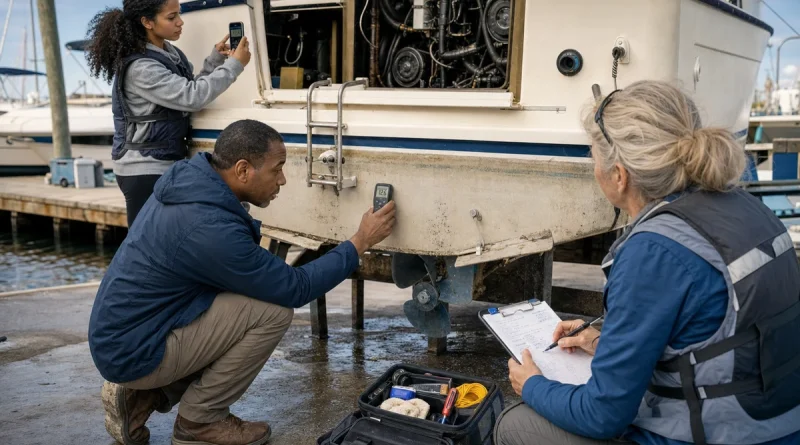
A prepurchase survey is a condition and value assessment for the buyer. The surveyor should work for you, have experience with the boat's construction and systems, and meet any credential requirements imposed by your insurer or lender.
The BoatUS boat survey guide explains that a typical survey can include an in-water inspection, haulout, and trial run. It also notes that specialized engine, rigging, or other inspections may be separate.
Do not assume a general survey replaces an engine diagnostic or specialist inspection. You should ask what is included, excluded, accessible, tested under load, and merely observed.
Leave enough time to use the findings
The purchase agreement should give you time to receive the written report, ask questions, obtain repair estimates, check insurability, and decide whether to proceed, renegotiate, or use a cancellation right. A survey completed the day before an unconditional closing does not give you much practical protection.
Ask which findings affect immediate safety, insurance, financing, seaworthiness, maintenance, and future cost. Not every defect is a deal-breaker, but you should understand the combined repair budget rather than negotiating each item in isolation.
Evaluate the ownership cost, not only the boat price
Estimate registration, tax, insurance, marina or storage, haulout, winterization, fuel, routine service, bottom work, trailer maintenance, safety equipment, and replacement reserves. Confirm whether local facilities can lift, store, and service the boat's size, propulsion, and construction.
You should also learn the maintenance history. Receipts, engine hours, oil analysis, service logs, damage records, and prior surveys are more useful than a seller saying the boat was "always maintained."
Questions to resolve before closing
- Do all identification numbers and ownership documents match?
- Exactly which equipment and accessories are included?
- Is the offer contingent on survey, trial, financing, and insurance?
- Does the surveyor specialize in this boat type and work only for me?
- Are haulout, engine diagnostics, rigging, and trailer inspection included?
- What repairs are urgent, and what do realistic estimates show?
- Can I insure, store, and service this boat locally?
- What will the first year of ownership cost beyond the purchase price?
The survey is not meant to prove that a used boat is flawless. It gives you a documented view of the boat you are actually buying, so enthusiasm does not have to carry the entire decision by itself.