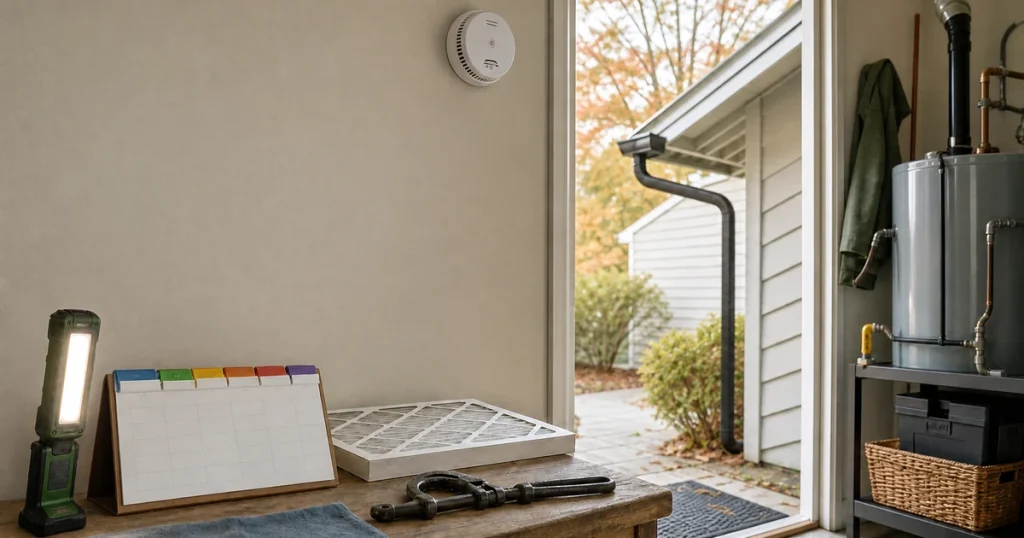
A Practical Home-Maintenance Schedule: What to Check and When
Most home-maintenance schedules are long enough to become another document you save and never use. They assign dozens of chores to months without helping you understand which missed task can become dangerous, expensive, or difficult to reverse.
A practical schedule works differently. Your home runs on three clocks: the calendar, the weather, and the symptoms the house gives you. You need all three because a date can remind you to inspect, but a storm or new water stain should not wait for its assigned month.
The calendar catches slow problems
Use recurring dates for conditions that can worsen quietly. Once a month, walk through the places where water, heat, combustion, or electricity could create a serious problem: under sinks, around toilets, near appliances and the water heater, at the electrical panel, and below accessible roof penetrations.
You are looking for change. New dampness, corrosion, unusual heat, discoloration, odors, pests, cracks, sounds, or a jump in utility use matters more than whether an older surface looks perfect.
Test smoke and carbon-monoxide alarms according to their instructions, and check heating and cooling filters against the equipment maker’s guidance and the conditions in your home. A household with pets, smoke, construction dust, or heavy system use may need a different interval than a generic calendar suggests.
The weather clock moves whether the calendar agrees or not
Seasonal maintenance should prepare the house for the conditions most likely to test it next. Before heavy rain, check visible roofing, gutters, downspouts, grading, drains, and the places where water has entered before. Before freezing weather, address exposed plumbing and exterior water connections according to local conditions.
Before the hottest or coldest part of the year, service heating or cooling equipment when the manufacturer or system condition calls for it. The best service date is before failure would leave the household competing with everyone else for an emergency appointment.
Climate changes the schedule. A coastal home, a mountain home, and a house in a hot, humid region face different combinations of wind, salt, freezing, drainage, insects, and moisture, so you should adapt any national checklist to the place where the building actually stands.
The house can interrupt the schedule
Some of the most important inspections are triggered by an event rather than a date. Check the affected areas after severe weather, freezing, flooding, nearby construction, a long vacancy, pest evidence, an unusually high utility bill, or any sudden change in sound, smell, temperature, or performance.
Suppose the water bill rises even though your routine did not change. Waiting for the annual plumbing review gives a hidden leak more time to damage the house. The EPA WaterSense home-maintenance guidance recommends checking for leaks and watching water use for unexplained changes.
Record when the symptom began and where you observed it. A dated photo or note can show whether a crack, stain, sound, or patch of corrosion is stable or growing.
Give priority to what can hide
A loose cabinet handle is visible every day. A slow leak behind an appliance, blocked dryer exhaust, deteriorating exterior seal, or damaged electrical connection may remain unnoticed until the repair is larger.
When time is limited, start with four questions:
- Could this condition injure someone or create a fire, gas, electrical, or carbon-monoxide risk?
- Could water or moisture continue damaging material where I cannot see it?
- Could waiting turn a small repair into failure of a larger system?
- Would this problem prevent the home from being safely occupied if it worsened?
Those questions do not eliminate ordinary upkeep. They help you avoid spending the only maintenance hour available on appearance while a higher-consequence problem keeps developing.
Use annual reviews for the whole system
At least once a year, step back from individual chores and review the roof, exterior, drainage, plumbing, electrical system, heating and cooling, foundation, attic or crawlspace, major appliances, decks, steps, railings, and safety equipment. The appropriate professional inspection interval depends on the age, condition, and risk of each system.
This is also a good time to update photographs, warranties, receipts, model numbers, contractor records, paint and material details, and emergency contacts. Confirm that insurance and household plans reflect significant changes to the property.
Know where homeowner maintenance ends
Inspection does not mean you should perform every repair yourself. Stop when the work involves structural instability, live electrical systems, gas, significant water intrusion, pressure systems, fall hazards, sewage, or suspected regulated materials such as lead or asbestos.
You should also stop when you cannot identify the source safely. Opening a wall or dismantling equipment without a plan can destroy evidence, create a new hazard, or make the eventual repair harder.
Keep a record short enough to survive
Your maintenance record needs only the system, observation or task, date, result, next action, and person responsible. Attach a photo, receipt, or manual when it will help you recognize change or explain the history to a professional.
The strongest schedule is not the one with the most boxes. It is the one that helps you notice dangerous or expensive change early, responds when weather or symptoms move the clock, and remains simple enough to repeat next month.
Pingback: What Should You Check During Your First Month in a New Home?