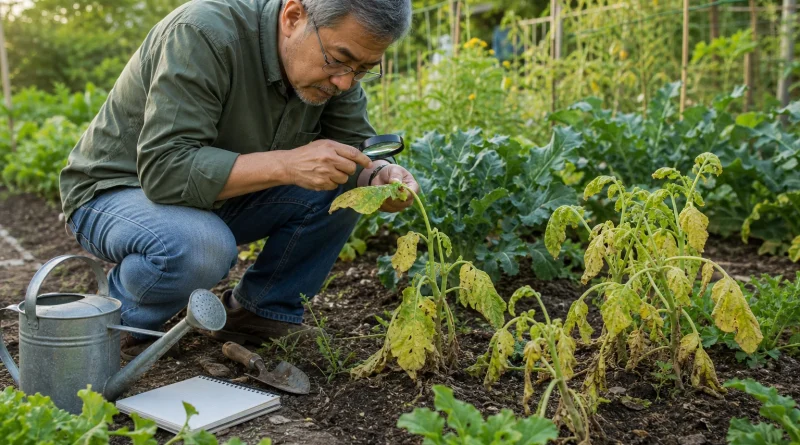
Why Are Your Garden Plants Struggling? Diagnose the Site Before Buying a Treatment
A yellow leaf is a symptom, not a diagnosis. It can point to too much water, too little water, damaged roots, nutrient trouble, disease, insects, temperature stress, or simply an old leaf reaching the end of its life.
Before buying fertilizer, pesticide, or a replacement plant, diagnose the site in an order that can eliminate causes. Start with the pattern, then inspect moisture, light, weather, roots, and signs of living pests or disease.
Begin with the pattern across the garden
One damaged plant suggests a different problem than an entire row declining at once. Damage on the windy edge of a bed, only near a downspout, or only on new growth tells you where to look next.
Ask what changed just before the symptom appeared: a heat wave, heavy rain, herbicide application, transplanting, construction, a new irrigation schedule, or a sudden cold night. Timing often narrows the possibilities faster than the color of the leaf.
Check the soil instead of guessing from the leaves
Push a finger or small trowel below the surface near the root zone. The top inch can look dry while the lower soil remains saturated, and a wilted plant can be suffering from either drought or roots damaged by excess water.
If the soil stays waterlogged, investigate drainage, compaction, irrigation leaks, and whether the plant is suited to that location. If it dries rapidly, check whether water is reaching the roots or running away across the surface.
Measure the light the plant actually receives
A plant tag that says “full sun” describes hours of direct light, not whether the area looks bright when you stand there. Buildings, fences, and trees can change the pattern across the season.
Observe the site in the morning, midday, and late afternoon. A plant receiving harsh reflected afternoon heat may react differently from one receiving the same number of gentler morning hours.
Look for physical evidence before treating pests or disease
Inspect the undersides of leaves, stems, buds, soil line, and roots when accessible. Look for insects, webbing, eggs, chewing patterns, spots with defined margins, powdery growth, cankers, rot, or damage that follows leaf veins.
Do not spray merely because damage exists. A pesticide cannot fix poor drainage, sun scorch, or root injury, and unnecessary treatment can harm beneficial organisms while leaving the actual problem untouched.
Change one likely cause and watch the response
When the evidence supports a manageable problem, correct it without changing five other things at the same time. Adjust irrigation, improve drainage, protect the roots, or correct the light exposure, then document what happens to new growth.
Old damaged leaves may not recover, so judge the response by whether the decline stops and healthy new growth appears. Constantly moving, feeding, spraying, and watering a stressed plant makes it harder to learn which condition mattered.
Use your extension service when the evidence conflicts
Take photographs of the entire plant, the site, both sides of affected leaves, and the transition between healthy and damaged tissue. Record the plant name, location, watering, recent weather, soil condition, and treatments already applied.
University extension offices and plant diagnostic clinics can often help, especially when a disease, invasive pest, herbicide injury, or soil problem is possible. Their experts may need a physical sample because, as extension specialists frequently note, opposite causes can produce similar-looking symptoms.
Your goal is not to name every disease from a photograph. It is to stop treating a clue as a conclusion and make the next action fit the evidence already in the garden.
Live Minder Connect member business
D&R Landscape and Excavation
Services · Fort Pierce and service areas across Florida
D&R Landscape and Excavation provides land clearing, forestry mulching, excavation, grading, landscaping, irrigation, lawn maintenance, tree services, and storm cleanup across Florida.