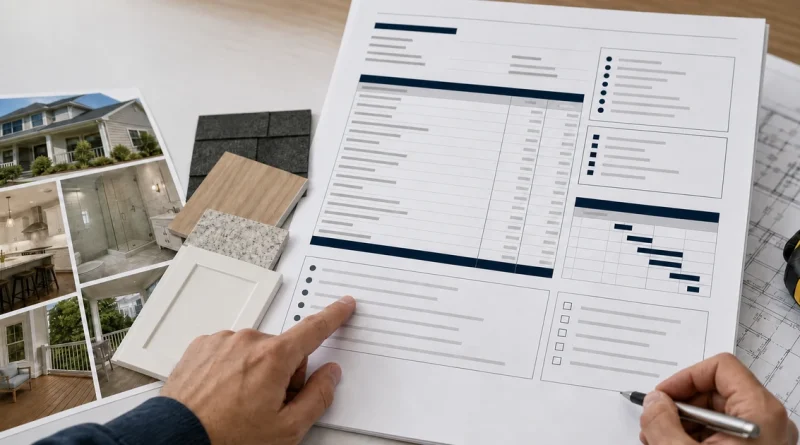
What Should a Professional Estimate Include?
If an estimate gives you one total and little else, you don’t really know what you’re agreeing to. You know the number, but not the version of the job that number buys.
A useful estimate tells you what will be done, what the provider is assuming, what’s excluded, how the price works, how long it remains valid, and what could change it. And the more complex or risky the work, the more those details matter.
And for regulated work, include required license or registration information.
Scope and method
Describe tasks, areas, quantities, measurements, preparation, installation, cleanup, and deliverables. And, identify drawings, photos, specifications, or site visits used.
You should expect the estimate to state assumptions about access, existing conditions, utilities, client-supplied information, and normal working hours, because unstated assumptions are a common reason the provider and customer believe they agreed to different versions of the same job.
Materials and labor
Identify important materials by type, grade, model, quantity, or allowance, and explain substitutions and who approves them.
Separate labor, materials, equipment, travel, tax, permits, disposal, and optional work when that detail helps comparison.
Exclusions
You should consider listing work not included, such as hidden damage, design, engineering, permits, moving, restoration, disposal, or third-party charges, as well as assign owner-supplied tasks and materials.
An exclusion is useful when it prevents an assumption. It’s harmful when it hides an unavoidable cost.
Read the estimate from the ending backward
Imagine the provider says the work is complete tomorrow. What would you expect to see, receive, test, and clean up before you agree?
Now look for each of those items in the estimate. This quick exercise often exposes the gap between what you pictured and what the provider priced.
Price structure
State whether the price is fixed, time and materials, unit-based, or a range. Show rates, units, allowances, taxes, deposits, payment milestones, and financing terms where relevant.
Explain the evidence needed to change the price and the written approval process. Do not let “subject to change” replace a change policy.
Schedule and validity
Include anticipated start, duration, dependencies, client decision deadlines, and conditions that may delay work. State how long the estimate remains valid.
Availability and price validity are separate. A current price does not necessarily reserve a date.
Warranty, acceptance, and next step
Summarize warranties, inspection, completion, acceptance, and correction of defects. Identify whether the estimate is informational or becomes a contract after signature.
Provide a clear acceptance method and attach terms before the client accepts.
The FTC’s contractor guidance recommends written estimates that identify the work, materials, completion date, and price. Those basics apply well beyond construction.
A strong estimate reduces expensive surprises for you and the provider. It can’t predict everything hidden behind a wall or inside a system, but it can make the known work and assumptions clear before money changes hands.