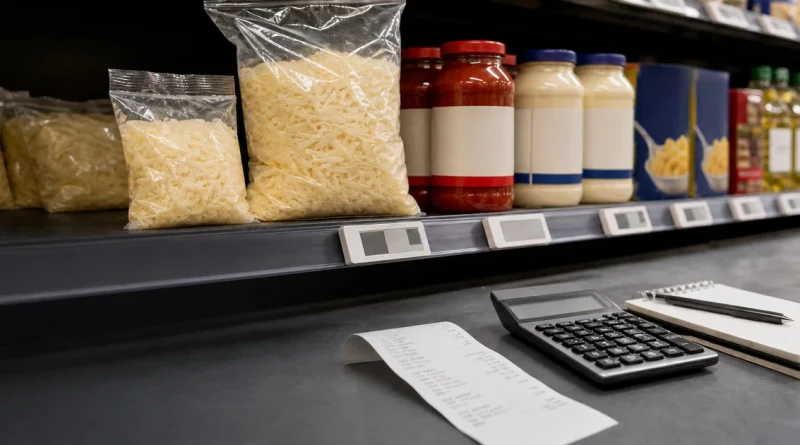
Why Are Prices Going Up? How to Read an Everyday Price Increase
You notice that the same grocery item, repair, rent, or subscription costs more, and the explanation is usually compressed into one word: inflation. That may describe the broader environment, but it doesn't tell you why this particular price changed.
To understand the increase, first make sure you're comparing the same thing. Then look at costs, supply, demand, competition, and changes in the product or market.
Confirm what changed
Compare the same product, size, quality, location, seller, tax treatment, and time period. Shrinkflation and product redesign can raise the effective unit price without changing the sticker price.
Separate a temporary sale ending from a base-price increase. Compare unit prices rather than package totals.
Look upstream
Materials, labor, energy, rent, insurance, transportation, interest, tariffs, compliance, waste, and supplier pricing can affect cost. The importance of each input differs by industry.
A local service may be driven mostly by labor and insurance, while an imported product may be more exposed to exchange rates, freight, and trade policy.
Check supply and demand
Weather, disease, conflict, factory outages, disasters, seasonal cycles, capacity limits, and inventory decisions can reduce supply. A sudden increase in buyers can raise prices even when cost has not changed.
Ask whether the market can add supply quickly. Housing, skilled trades, energy, and specialized manufacturing may respond slowly.
Examine competition and strategy
Businesses also change prices because competitors left, demand became less price-sensitive, the offer was repositioned, or a low introductory price ended. Cost increases are not the only explanation.
Compare several sellers and substitute products. One company's increase is not automatically a market-wide increase.
Use the CPI correctly
The Consumer Price Index measures average price change across a representative basket. The Bureau of Labor Statistics explains that individual experience differs because households buy different things in different proportions.
A national average cannot explain one grocery item or one city's rent by itself. Use the detailed category and regional data that fit the question, while recognizing sampling limits.
Avoid single-cause stories
Several forces can operate at once, and their timing differs. A business may absorb an input increase for months before changing prices.
Claims about greed, policy, wages, shortages, or money supply need evidence matched to the product and period. A plausible cause is not proof of the dominant cause.
Make the explanation useful
For a household, you should compare substitutes, timing, contracts, unit costs, and which increases materially affect the budget. For a business, you should separate temporary shocks from costs likely to persist before changing price or capacity, because a permanent response to a short-lived increase can create a new problem after costs settle.
The honest answer may be several contributing causes. Understanding what actually changed is more useful than forcing every price increase into one political or economic slogan.