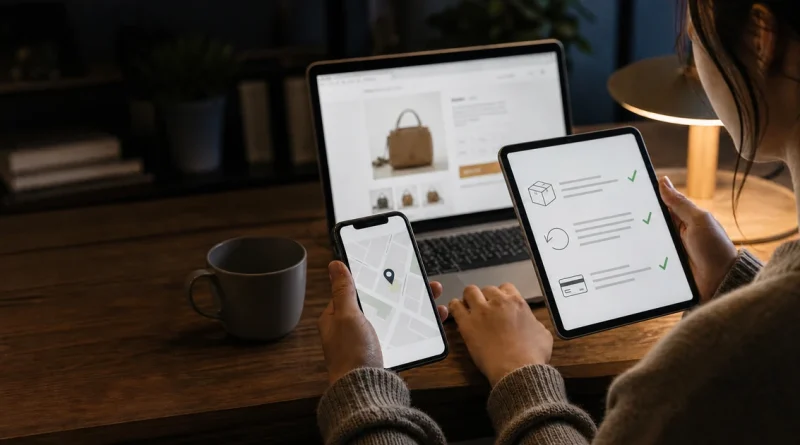
Can You Trust This Online Store? What to Check Before Ordering
You find the exact item you've been looking for, and this unfamiliar store has it for 35 percent less than everyone else. Maybe you found a great deal. Maybe the price is there to keep you excited long enough to skip the checks you'd normally make.
You don't have to prove the store is perfect. You need enough consistent evidence that the seller, product, policies, and payment process belong to a real transaction.
Identify the business
Look for a legal or trading name, physical address, working contact method, and clear information about who fulfills the order. Search the domain and business name independently.
Check how long the site and public accounts appear to have operated. A new site is not automatically fraudulent, but it has less history to support a high-risk purchase.
Test the offer
Compare the exact model, condition, quantity, warranty, and complete price with established sellers. Deep discounts on scarce or premium goods need a credible explanation.
Reverse-search suspicious product images and read the description for copied text, contradictory specifications, or terms that do not match the advertised item.
Read reviews as evidence, not a vote
Use several independent sources and inspect dates, detail, reviewer history, and complaint patterns. A sudden cluster of vague praise can be less useful than a smaller number of specific reports.
The FTC's online-shopping guidance warns that reviews and star ratings can be fake or misleading and recommends checking several sources.
Read delivery and return terms
Find processing time, shipping origin, tracking, delivery promises, return window, return address, restocking fees, condition requirements, and who pays shipping.
Save the policy that applied when you purchased, because a vague promise of "easy returns" isn't a usable process.
Ask one ordinary question
Contact the store with a normal product or delivery question before making an expensive purchase. You're not trying to trick anyone; you're checking whether a real person or functioning support system gives you a specific answer.
A canned reply that ignores the question, a disconnected number, or pressure to pay another way gives you information before your money is involved.
Evaluate payment
You should use a payment method with meaningful dispute protection when the seller is unfamiliar. Gift cards, wire transfers, cryptocurrency, and payment outside a marketplace are difficult or impossible to reverse, which is exactly why dishonest sellers prefer them.
HTTPS protects data in transit but does not prove that the recipient is honest. Check the exact domain before entering payment information.
Minimize information
Provide only what the order requires. Question demands for identity documents, account credentials, remote access, or unrelated financial information.
Use a unique password if an account is required and do not save payment information unnecessarily.
Keep a purchase record
Save the listing, price, product description, policies, confirmation, promised date, messages, tracking, and payment record. Inspect the item promptly after delivery.
Walk away when you can't verify the identity, the policies contradict the offer, pressure replaces answers, or the seller wants payment without normal protection. Missing one deal costs less than recovering from a store that never intended to honor it.