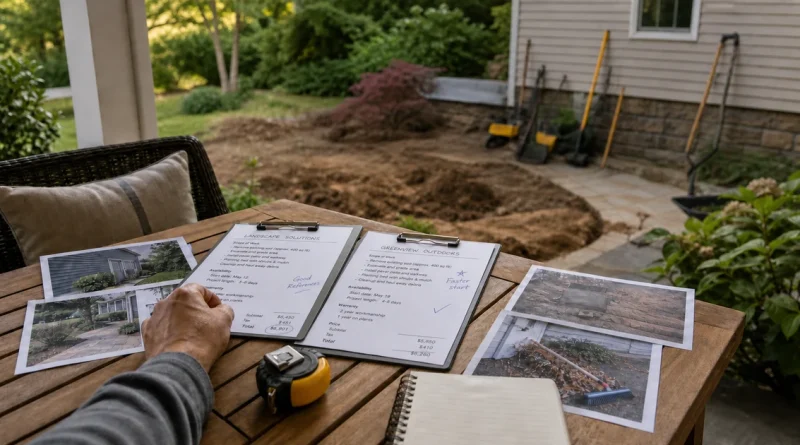
How to Compare Local Service Providers Without Choosing on Price Alone
When two local service providers give you very different prices, it's tempting to assume one is expensive and the other is reasonable. Sometimes that's true. Just as often, they're pricing two different versions of the job.
Before you compare the totals, make sure each provider is solving the same problem and promising the same usable result.
Define the outcome
Write what needs to be done, where, when, and what a completed result looks like. Include known conditions, access, photos, measurements, and constraints.
Ask each provider to explain the proposed method and assumptions. Different methods may produce different durability, disruption, and future maintenance.
Normalize the estimate
Compare labor, materials, quantities, equipment, travel, permits, disposal, cleanup, taxes, warranties, and optional work. Mark every item as included, excluded, allowance, or unclear.
Ask what can change the price and how authorization works. An estimate is more useful when it explains uncertainty.
Verify qualifications that matter
Check identity, address, licensing where required, insurance, training, and complaint history through the issuing source. Do not request a credential that has no relationship to the work.
You should ask references about work similar to yours and how the provider handled a delay or mistake. And you'll often learn more from a problem handled responsibly than from a testimonial where everything was supposedly perfect, because real service work rarely happens without some adjustment or surprise.
Pay attention to the questions they ask you
A good provider usually asks questions that affect the result. They may notice access problems, materials you haven't selected, timing conflicts, or a hidden dependency before giving you a final number.
If someone can quote a complicated job in seconds without asking much, the quote may be based on assumptions you haven't seen. Ask them to put those assumptions in writing.
Review communication
Notice whether the provider asks useful questions, confirms decisions, and explains limitations. Fast replies are less important than accurate and traceable ones.
Identify who performs the work, supervises it, and can approve changes. A salesperson's promise should appear in the written agreement.
Compare schedule and disruption
Record start timing, duration, access, working hours, cancellations, weather, client preparation, and what happens if the work cannot proceed.
A faster service may be worth more when downtime is expensive. A rushed schedule may be worse when quality depends on preparation or curing.
Read the agreement
Confirm scope, price, payments, changes, warranty, damage responsibility, cancellation, dispute process, and completion or acceptance. Keep deposits proportionate to legitimate early costs and local rules.
Avoid blank spaces and verbal side agreements.
Choose the risk-adjusted value
Add credible costs for missing work and compare the chance and consequence of failure. The best provider for you may not be the cheapest, most reviewed, or largest.
Choose the proposal that defines the result clearly, tells you who owns each responsibility, and gives you credible evidence that this provider can deliver what you actually need.