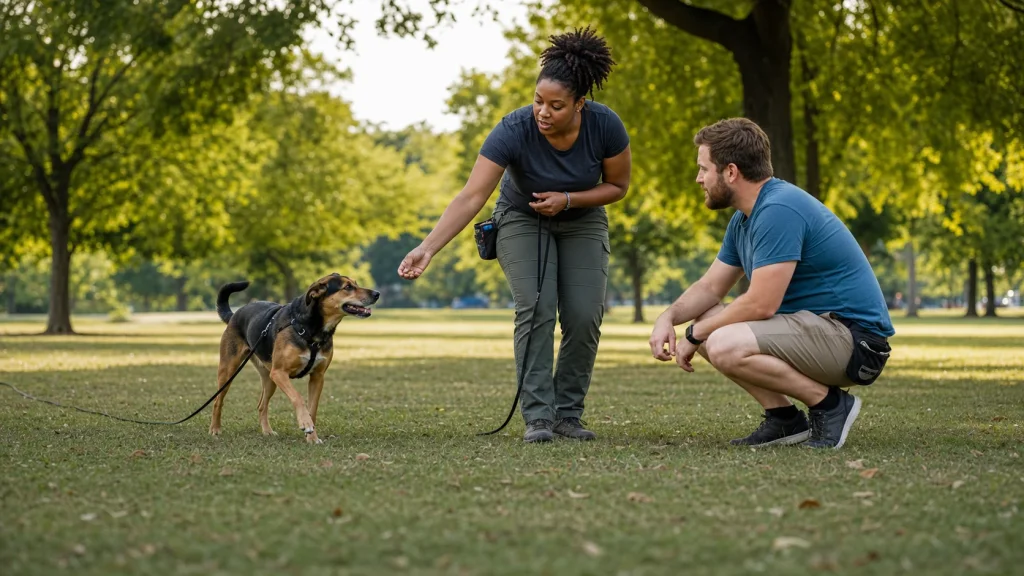
How Do You Choose a Dog Trainer Who Uses Humane, Effective Methods?
A dog trainer can sound convincing long before you see how they handle a frightened, distracted, or frustrated dog. That is why “the trainer seemed confident” isn’t enough of a hiring test.
You should ask what the trainer will do when your dog gets it wrong. The answer reveals more about the training than a list of commands the dog may learn.
Start with the problem you actually need solved
A puppy manners class, loose-leash coaching, separation-anxiety plan, and aggression case require different experience. Describe what happens, when it happens, and what you want daily life to look like instead.
Be wary of a trainer who promises a standard package before asking about the dog’s health, history, environment, and triggers. A polished program may still be the wrong program if the trainer hasn’t identified the behavior they are trying to change.
Ask the trainer to explain the method in ordinary language
You don’t need to become a behavior specialist before hiring one. You do need an answer more specific than “balanced,” “natural,” “leadership,” or “positive.”
Ask:
- What will you use to motivate the behavior you want?
- What will you do when my dog does not respond?
- What equipment do you use, and why?
- How will you recognize fear, stress, or pain?
- What will I need to practice between sessions?
A good trainer should be able to explain the plan without making you feel foolish for asking. If the method depends on secrecy or on your unquestioning trust in the trainer’s authority, you can’t give informed consent to what will happen to your dog.
Look for a plan that changes behavior without creating fear
The American Veterinary Society of Animal Behavior supports reward-based training methods and warns that aversive methods carry risks to welfare and the human-animal bond. That matters because stopping a behavior in the trainer’s presence isn’t the same as helping a dog feel safe and make a better choice.
Watch for methods that rely on intimidation, pain, flooding a dog with something it fears, or punishing warning signals such as growling. Silencing the warning doesn’t necessarily remove the discomfort beneath it; it can leave you with less information before a bite.
Check education and relevant experience
Dog training isn’t regulated like veterinary medicine, so the title alone may tell you very little. Ask about certifications, continuing education, supervised experience, insurance, and cases similar to yours.
A credential is one useful signal, not a substitute for evaluating the actual method. Verify the credential with the issuing organization and ask what standards, testing, and continuing education it requires.
Expect referral when the case exceeds the trainer’s role
Pain and illness can change behavior. Sudden aggression, house-soiling, sensitivity to touch, or a major behavior change should prompt a veterinary evaluation, not an assumption that the dog has become stubborn.
Serious fear, aggression, compulsive behavior, or separation-related distress may require coordination with a veterinarian or veterinary behaviorist. A trainer who refers appropriately is showing professional judgment, not admitting failure.
Observe before committing when possible
Ask to observe a class without your dog or watch an unedited session. Notice whether dogs can disengage, whether handlers receive clear instruction, and whether the trainer adjusts when an animal struggles.
The right trainer isn’t simply the person who can make a dog comply during a demonstration. It is the person who can teach you, protect the dog’s welfare, measure progress in ordinary life, and change the plan when the dog is telling everyone that the current one isn’t working.
Live Minder Connect member business
NC K9 LLC
Pets · Four Oaks, North Carolina
NC K9 LLC provides obedience training, behavior modification, puppy training, and other dog-training services in North Carolina.