How to Compare Contractor Estimates Without Comparing the Wrong Things
One contractor comes in thousands of dollars below the others. That could be a genuinely better price, or it could mean demolition, permits, cleanup, better materials, or an important repair never made it into the estimate.
You can't compare contractor totals until the scope, the materials, the allowances, the exclusions, the schedule, and the payment terms describe the same project. A simple comparison sheet will show you where they don't.
Start with one written scope
Describe the rooms, the systems, the measurements, the existing conditions, the desired result, and the work the owner expects to keep. Give each contractor the same drawings, photos, product preferences, and known problems.
Ask the contractor to identify assumptions instead of pricing around an unseen condition. An estimate built on different assumptions isn’t a competing price for the same work.
Separate labor, materials, and allowances
The estimate should identify important materials by type, grade, model, finish, quantity, or performance standard. "Install new flooring" is too vague to compare.
An allowance is a placeholder for something not selected. Compare the allowance with realistic products, tax, delivery, waste, and installation.
If one bid includes a $2,000 cabinet allowance and another includes $12,000, the totals aren’t ready for comparison.
Find the exclusions
Ask who handles demolition, debris, permits, design, engineering, inspections, site protection, cleanup, temporary utilities, delivery, moving furniture, landscaping repair, and final touch-ups.
The FTC's home-improvement guidance recommends written estimates that describe the work, materials, completion date, and price. It also advises getting multiple estimates and asking about large differences.
You should compare multiple estimates when the project and market allow it, but the number itself isn’t the protection. The value comes from seeing where qualified contractors disagree about scope, assumptions, materials, or risk before you choose one.
An exclusion isn’t automatically bad, but it becomes dangerous when nobody budgets or assigns it.
Compare the schedule and crew
Record the estimated start, the duration, the working hours, the major milestones, and the conditions that can extend the schedule. Ask whether the crew will remain assigned or move between projects.
Clarify who supervises, which work is subcontracted, and how access and daily cleanup will work. A shorter promise has little value when the contractor can’t explain how it will be achieved.
Review payment and changes
Tie payments to defined progress rather than dates alone. Avoid paying the full amount before work begins, and check state limits on deposits.
The contract should explain how changes are priced and approved. Don’t let verbal changes accumulate until the final invoice.
Verify the business
Confirm the exact contracting entity, the address, the license where required, the insurance, the references, the complaint history, and who will obtain permits. Verify important claims with the issuing source.
Ask references about communication, changes, cleanup, schedule, and how the contractor handled a problem. A flawless project is less revealing than a problem resolved responsibly.
Compare the bids on the same basis
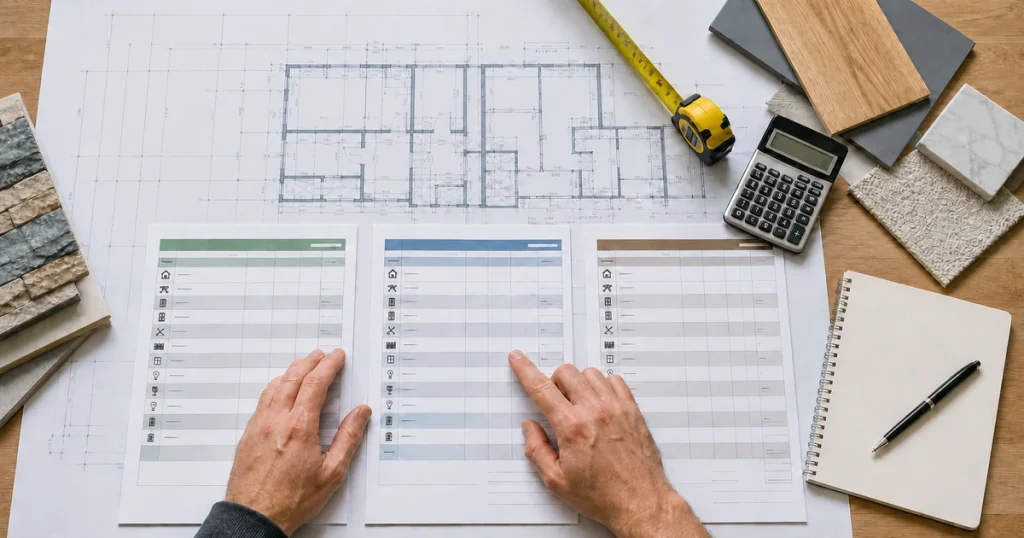
Create rows for each scope item and columns for each contractor. Mark included, excluded, allowance, owner-supplied, or unclear.
Add credible costs for omissions before comparing totals. Then compare warranty, schedule, supervision, payment risk, and confidence in the scope.
The best estimate isn't automatically the longest or the cheapest. It's the proposal that most clearly defines a complete, buildable result at a price you and the contractor can realistically honor.
Live Minder Connect member business
D&R Landscape and Excavation
Services · Fort Pierce and service areas across Florida
D&R Landscape and Excavation provides land clearing, forestry mulching, excavation, grading, landscaping, irrigation, lawn maintenance, tree services, and storm cleanup across Florida.
Pingback: Questions to Ask Before Hiring a Property Manager