What Should You Check Before Bidding in an Online Auction?
Before you bid in an online auction, verify four separate things: the platform, the seller, the exact item, and the payment and dispute path. The countdown creates pressure, but winning a poorly understood listing is not a bargain.
Set your maximum total cost before the final minutes, and be willing to let the item go. That one decision protects you from most of the auction’s emotional pull.
Learn what the platform will and will not do
Read the marketplace’s rules for payment, buyer protection, returns, prohibited items, authenticity disputes, shipping damage, and deadlines. Some platforms process the transaction and investigate problems, while others mainly introduce buyer and seller.
The Federal Trade Commission’s online marketplace guidance recommends checking which protections actually apply, using safer payment methods, keeping messages, and tracking return and dispute deadlines. Do that before you bid, because the platform’s protection may depend on staying inside its payment and messaging system.
Review the seller as a pattern, not a score
Read recent feedback, especially for items similar in value and condition to the one you want. A high rating built on hundreds of inexpensive sales may tell you little about one costly collectible.
Look for repeated complaints about descriptions, cancellations, packaging, delayed shipping, refunds, or pressure to pay elsewhere. Check how the seller responds when something goes wrong. A credible response does not erase the complaint, but it shows how problems are handled.
Make the listing describe this exact item
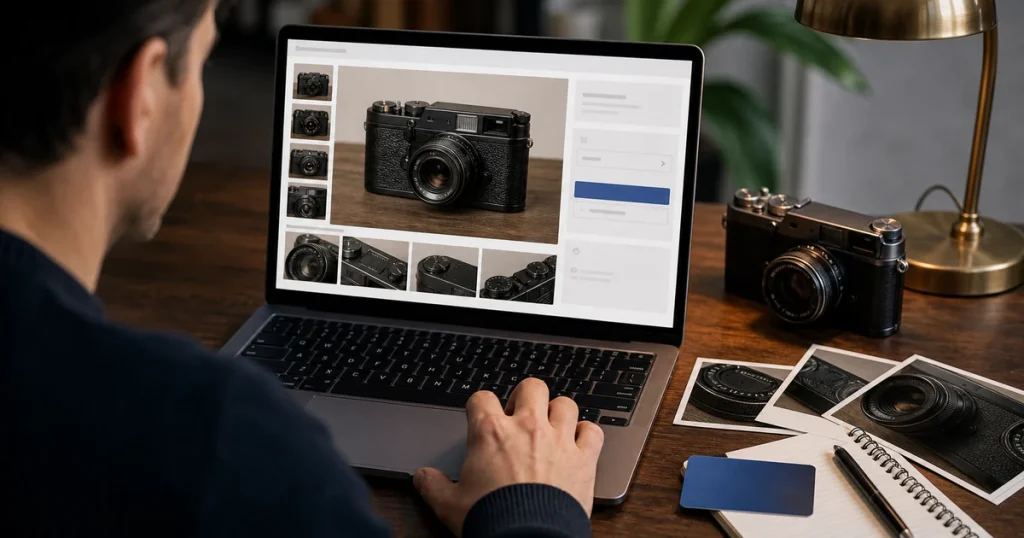
Stock photos cannot show scratches, missing parts, repairs, serial numbers, wear, or whether the seller possesses the item. Ask for clear photographs of the actual object from several angles and request close-ups of the areas that affect function or value.
Translate vague condition words into observable facts. “Untested” does not mean working, “vintage” does not prove age, and “as is” does not tell you what the seller knows. Ask what was tested, how it was tested, what failed, what is missing, and whether any repair or restoration is known.
Verify authenticity in a way the item allows
Different markets use different evidence: maker’s marks, serial numbers, provenance, dimensions, materials, included documents, service records, or third-party authentication. Learn which signals matter before asking the seller for them.
Be careful with certificates that cannot be traced to an identifiable issuer. A piece of paper is evidence only when you can understand who created it, what they examined, and how the conclusion can be checked.
If authenticity is a major part of the price and you cannot verify it yourself, ask whether the sale can be made subject to an inspection by a qualified authenticator or appraiser. If the seller or platform cannot support a trustworthy verification path, the safer decision is not to bid.
Calculate the cost that arrives at your door
Your limit should include the bid, buyer’s premium, sales tax, shipping, insurance, currency conversion, import charges, pickup or travel, and any immediate repair or appraisal. If you plan to resell, include platform fees and the uncertainty of the future sale.
Write that total down before the auction becomes exciting. Then set the maximum bid by subtracting every other expected cost from the most you are willing to spend.
Protect the payment and delivery trail
Do not move payment outside the platform just because the seller offers a discount. Keep the listing, photos, condition statements, seller messages, payment receipt, and shipping details until the inspection and dispute periods have passed.
For an expensive item, consider insured, tracked delivery and document the unopened package and condition on arrival. If the item is materially different, report the problem through the platform promptly rather than negotiating past the deadline.
Use a no-bid rule
Do not bid when the seller refuses reasonable condition questions, the photos do not establish possession, required payment bypasses platform protection, the total cost is unclear, or the listing creates urgency while withholding basic facts.
If the auction is simply one form of online store, use our broader online-store trust checklist to check the site identity, policies, payment path, and independent reputation too.
A strong auction decision can end without a purchase. You did not lose because someone else paid more; you protected the price and conditions that made the item worthwhile to you.