OEM vs Compatible Ink and Toner: What Should You Check Before Buying?
The cheapest ink, toner, label roll, storage media, cable, or battery can become expensive when it produces poor output, damages equipment, or has to be replaced twice. But paying the manufacturer's price for every recurring supply isn’t automatically the safer choice either.
You should compare compatibility, expected yield, warranty, return terms, and the cost of failure instead of treating OEM and compatible supplies as identical products with different labels.
Confirm the exact item your equipment requires
Start with the equipment model, the regional version, the connector, the size, the chemistry, the capacity, and the firmware requirements. Similar-looking cartridge or battery numbers may fit physically while using a different chip, voltage, formulation, or communication standard.
Use the equipment manual or manufacturer's compatibility list as a reference, then make sure the seller names your exact model, because "works with most" isn’t enough for a supply that can leak, jam, overheat, or interrupt a deadline.
Compare output, not just package price
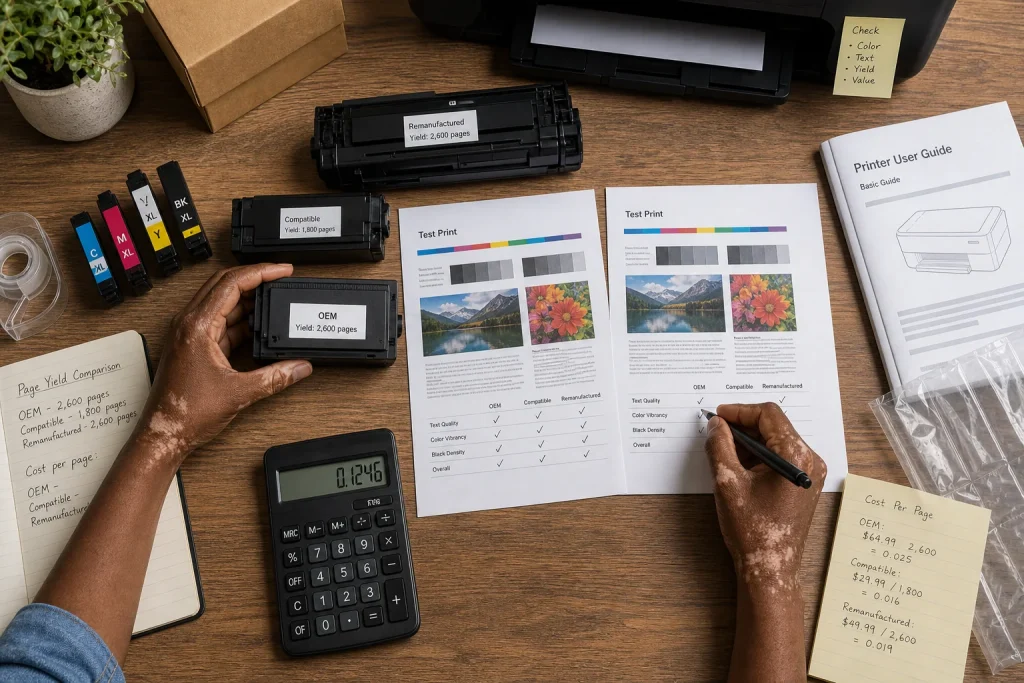
For ink and toner, compare the claimed page yield and the testing basis behind it. Real yield changes with page coverage, print settings, cleaning cycles, storage, and the type of material you print, so a cartridge advertising more pages may not produce a lower cost per usable page.
A basic starting calculation is:
Cost per usable page = total cartridge cost divided by the number of acceptable pages you actually receive.
If a $60 cartridge produces 1,000 pages you can use, its supply cost is 6 cents per usable page. If a $40 alternative produces 800 pages but 100 are reprints, streaked pages, or failed labels, the usable-page cost is about 5.7 cents before you add the paper, labor, cleaning cycles, or interruption caused by those failures.
Published yields are useful for standardized comparisons, not promises about your exact workload. HP's published ISO toner yield reports, for example, identify the test standard, the test pages, the print mode, the equipment, and the other conditions behind the reported result.
You should consider the consequence of inconsistent color, fading, smearing, or failed labels. A compatible cartridge may be perfectly reasonable for internal drafts but less attractive when you produce client proofs, product labels, legal records, or photographs that must remain consistent.
For batteries, storage media, and power accessories, suspicious capacity claims and missing safety information deserve extra caution. A product that stores energy or important data carries more risk than an ordinary cable.
Read both warranties instead of repeating a myth
A common claim says that using any third-party supply automatically voids the equipment warranty. The FTC's federal warranty guidance explains that warranty terms generally can’t require a particular branded item or service unless it is provided free or the warrantor has an applicable waiver.
That doesn’t mean a manufacturer must repair damage caused by a defective compatible product. The practical distinction is between using a third-party supply and causing damage with one.
You should keep the receipt, packaging, lot number, and photographs if a supply fails. Also check the compatible supplier's warranty: does it cover only a replacement cartridge, or does it address documented damage to the equipment?
Evaluate the seller as part of the product
Look for a real return period, accessible support, clear compatibility data, product traceability, and recent reviews that discuss your equipment model. Extremely low prices, altered packaging, and sellers that disappear between purchases make it harder to resolve a failure.
Test a small order before changing supplies across an office, and record error messages, print quality, usable yield, and time spent troubleshooting because a supply that saves $15 but creates an hour of labor didn’t save money.
Run a controlled trial before changing the whole office
Use one printer, the same paper, the same print settings, and a representative mix of your normal documents. Record the printer's page count before and after the test, then track acceptable pages, reprints, cleaning cycles, error messages, and the time someone spends correcting problems.
You should also keep one known-good OEM cartridge available during the trial when a missed deadline would be costly. If the problem disappears when the known-good cartridge is installed, you have stronger evidence about the supply than you would get from arguing over a generic review.
Don’t judge the trial from ten easy text pages if your real work includes color proofs, barcodes, photographs, or adhesive labels. Test the output that can actually cost you money when it fails.
Choose according to the job
OEM supplies offer known compatibility and may simplify support, but compatible or remanufactured products can offer real value when they come from a responsible supplier and perform adequately for the work. There is no honest answer that makes one choice best in every machine and every situation.
Buy the supply whose total risk matches the job. Consider how well the supply works, how much trouble a failure would cause, and whether the seller will help you resolve it. The package price alone won’t answer those questions.