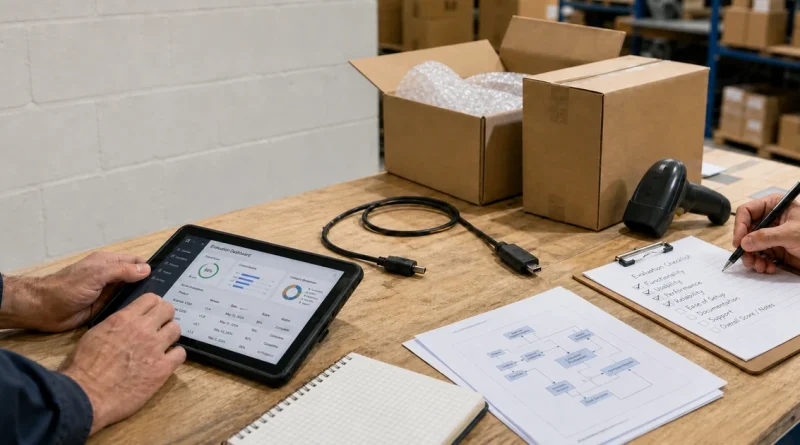
How to Evaluate a New Technology Before Your Business Depends on It
Technology demos are designed around the happy path, where the sample data is clean, the integration works, and the person clicking the buttons already knows where everything is.
Your business needs to know what happens on an ordinary Tuesday when the data is messy, a new employee is using it, and one of the connected services is down. That's why you should run a reversible pilot before the technology becomes part of work you can't afford to stop.
Define the job and owner
Write the problem, users, inputs, required outputs, decision rights, and current baseline. Name the person responsible for performance after purchase.
Do not buy a broad platform when the business cannot identify the first process it will replace or improve.
Test realistic work
Use representative volume, difficult cases, multiple users, mobile conditions, accessibility needs, and required integrations. Measure accuracy, speed, corrections, downtime, and support effort.
You should include a failure test, not only a successful demonstration. Disconnect an integration, remove a permission, restore data, and confirm what your users see, because the costliest surprises usually appear when the normal path stops working.
Let a normal user run the test
The person who selected the product already knows why it should work. Give a realistic task to someone who'll use it without that background and watch where they hesitate.
Don't rescue the test too quickly. Confusion, undocumented steps, and workarounds are part of the implementation cost, even when the software technically works.
Review data and security
Map what the vendor collects, where it is stored, who can access it, how it is used, how long it is retained, and how it is deleted or exported.
The FTC's vendor-security guidance recommends putting security expectations in contracts, limiting access, and verifying vendor compliance.
Match the review to legal, contractual, and industry obligations. Marketing statements do not replace a security assessment.
Examine integration and ownership
Confirm API limits, synchronization, error handling, identity management, logs, backups, and who supports each connection. Determine which system remains the source of truth.
Ask who owns configurations, templates, generated assets, and customer records. Confirm usable export formats before importing valuable data.
Calculate complete cost
Include licenses, usage, implementation, migration, training, hardware, customization, integration, support, security review, maintenance, and exit.
Test how price changes with growth. A cheap pilot can become expensive when every user, record, message, or automated action is billed separately.
Check support and continuity
Use support during the trial. Record response time, escalation, service commitments, maintenance windows, and what happens after an outage.
Review vendor stability without assuming size guarantees continuity. Keep an operating workaround for the time the business can reasonably tolerate failure.
Plan the exit before entry
Document cancellation, export, deletion confirmation, replacement timing, and responsibility for restoring the old process. Avoid a design where leaving requires rebuilding information the vendor will not return.
Adopt it when the pilot shows real value under real conditions and your business can survive a failure or an exit. Dependence should be earned by evidence, not created by a contract.