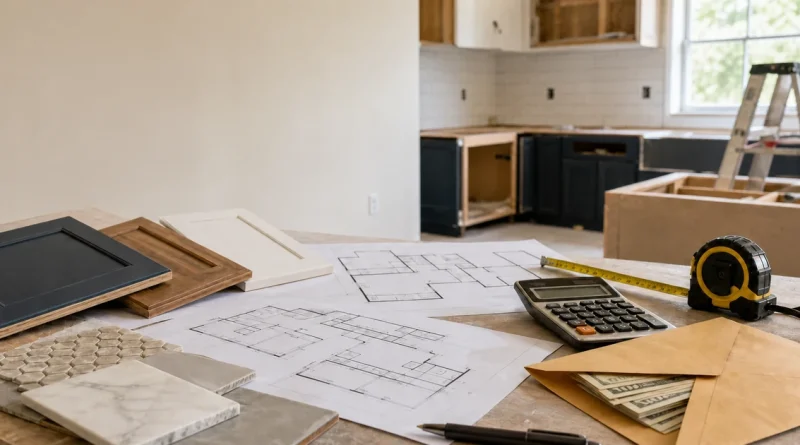
How Much Should You Budget for a Renovation Before Requesting Quotes?
You may not know what a renovation will cost until contractors see the project, but you still need a budget before you ask for quotes. Otherwise, you can spend weeks pricing a design that was never financially realistic.
Your planning number isn't a promise of the final cost. It's a way to test whether the project you want and the money available belong in the same conversation.
Define the required result
Separate repairs, code or safety work, functional improvements, and preferences. Rank what must happen, what should happen, and what can wait.
Measure the space and document visible conditions. Gather prior plans, surveys, warranties, repair records, and information about the age of major systems.
Price the whole project
Budget for:
- design, engineering, or surveys;
- permits, plan review, and inspections;
- demolition and disposal;
- labor, materials, equipment, and delivery;
- taxes and contractor overhead;
- owner-purchased fixtures and finishes;
- utility, landscape, and surface restoration;
- storage or temporary housing;
- cleaning and moving; and
- financing and insurance changes.
A kitchen estimate that excludes appliances, electrical upgrades, design, and temporary food costs is not the kitchen's full budget.
Use ranges before selections are complete
Early estimates should state assumptions and ranges. A single exact number creates false precision when layout, products, access, and hidden conditions remain unknown.
Price several representative selections before setting allowances. If the products you would actually accept cost more, increase the planning amount before requesting bids.
Add contingency based on uncertainty
Contingency is for unknown work, not a way to hide desired upgrades. Older buildings, inaccessible systems, water damage, structural changes, and incomplete drawings create more uncertainty.
You should keep contingency under your control rather than disclosing it as money available to spend, because when it is not needed for unknown work, it should stay with you instead of quietly becoming the budget for upgrades.
Confirm hazards and code triggers
Work in older buildings can involve lead, asbestos, outdated wiring, plumbing, structural issues, or environmental conditions. The EPA advises lead-safe practices for renovation that may disturb lead-based paint in pre-1978 homes.
Ask local officials what permits and upgrades the proposed work may trigger. Discovering a required service or code improvement after demolition can change the budget materially.
Test the budget against financing
Compare cash, loan cost, monthly payment, appraisal risk, and the effect of delays. Do not commit every available dollar to the contract amount.
Maintain reserves for ordinary household emergencies during construction. Renovation should not make an unrelated furnace or vehicle repair impossible.
Request comparable proposals
Give bidders the same drawings, scope, selections, and assumptions. Ask each to identify exclusions, allowances, alternates, payment milestones, schedule, and change procedures.
If proposals exceed the budget, reduce scope deliberately. Cutting an arbitrary percentage from every line can remove necessary work while leaving the design unchanged.
A useful planning budget gives you choices before contracts are signed. It makes the tradeoffs visible while they're still inexpensive to change.