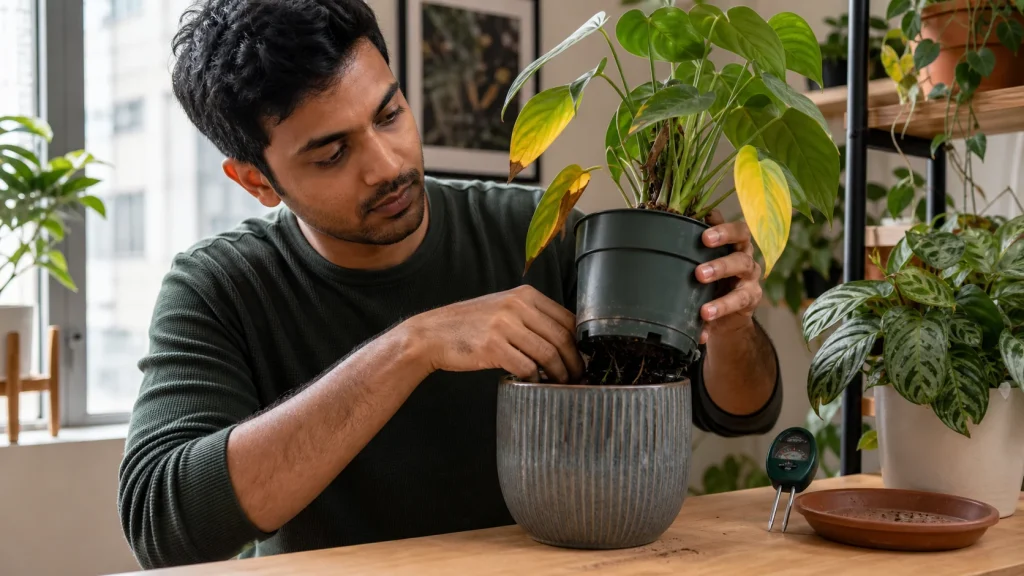
Is Your Houseplant Overwatered or Underwatered? Check the Soil Before the Leaves
A drooping houseplant looks thirsty. Unfortunately, a plant with damaged roots can droop while sitting in wet soil, which means another glass of water may make the real problem worse.
You should treat the leaves as an alarm, not a diagnosis. Before watering, check what is happening in the soil and around the roots.
Check moisture below the surface
The top of a pot can look dry while the lower soil remains wet. Push a finger into the soil as far as is practical, use a wooden skewer, or feel the pot’s weight compared with how it feels after a thorough watering.
Don’t let a calendar make the decision by itself. A plant may use water faster in bright summer light and much more slowly during a cool, dim week. The same seven-day schedule can underwater it in one season and overwater it in another.
Read the pattern, not one symptom
Both overwatering and underwatering can cause wilting, yellowing, leaf drop, and brown edges. Look for a group of clues:
- Dry soil, a very light pot, crisp leaves, and soil pulling from the pot’s edge point toward insufficient water or soil that has become difficult to rewet.
- Wet soil that stays wet, yellow lower leaves, soft stems, a sour smell, or dark mushy roots point toward excess moisture and possible root damage.
- Dry leaf edges with moist soil may involve low humidity, salt buildup, root damage, or another stress rather than simple thirst.
The University of Minnesota Extension advises checking soil moisture and watering according to the plant and conditions, not simply following one schedule for every houseplant.
Make sure water has somewhere to go
A decorative pot with no drainage turns every watering into a guess. Water can collect below the visible soil while the surface appears normal.
Use a pot with a drainage hole or keep the plant in a nursery pot inside the decorative container. Water thoroughly enough to moisten the root ball, let the excess drain, and empty water left in the saucer or outer pot.
If the soil is dry, rewet it evenly
Very dry potting mix can shrink and let water rush down the sides without wetting the roots. Apply water slowly in stages, or soak the nursery pot briefly and allow it to drain fully.
Don’t compensate with small daily splashes. They may wet only the surface and encourage a weak, uneven root zone. The useful cycle for many houseplants is a thorough watering followed by enough drying for that particular species.
If the soil is wet, stop adding water and find out why
Move the plant out of standing water and check whether the pot drains. Consider whether it recently moved to lower light, whether the pot is oversized, or whether dense soil is holding water for too long.
If the plant continues declining, gently inspect the roots. Healthy roots are generally firm; rotted roots may be dark, soft, and easily pulled apart. Remove badly damaged material with clean tools and repot in a suitable, well-draining mix when necessary.
Change one major variable at a time
A stressed plant often receives water, fertilizer, a larger pot, a new window, and a home remedy on the same afternoon. If it improves or worsens, you have no idea which change mattered.
Correct the clearest problem first, then give the plant time to respond. Existing damaged leaves may not become green again, so judge recovery by stable stems, healthy new growth, and a soil-moisture cycle that makes sense. The leaves got your attention; the soil tells you what to do next.