How Can You Make Your Yard More Wildlife-Friendly Without Creating New Problems?
You can make your yard more welcoming to birds, butterflies, and other wildlife while keeping it manageable and avoiding problems near the house. Think about what you’d like to attract and where food, water, and shelter would fit safely.
Wildlife needs food, water, shelter, and places to raise young. You should provide those needs in ways that fit your property, your climate, and the animals you are prepared to encounter.
Start with one native plant layer
Native plants evolved alongside local insects and wildlife, so they often provide more useful food and shelter than decorative plants chosen only for appearance. The U.S. Fish and Wildlife Service recommends native plants and reduced pesticide use as practical ways to help wildlife at home.
You don’t need to replace the entire yard. Add one layer your property is missing: a native flowering patch, a shrub that offers cover, or a small tree appropriate for its mature location. Several plants of the same species are often easier for pollinators to find than isolated single plants scattered everywhere.
Choose plants for the site you have
A native label doesn’t make a plant right for every corner of your yard. Match the plant to the available sunlight, drainage, soil moisture, and mature space.
This is where good intentions often create maintenance problems. A moisture-loving plant placed against a dry wall will struggle, while a large shrub placed beneath a window may require constant pruning. Habitat that can’t be maintained is likely to be removed later.
Offer water without breeding mosquitoes
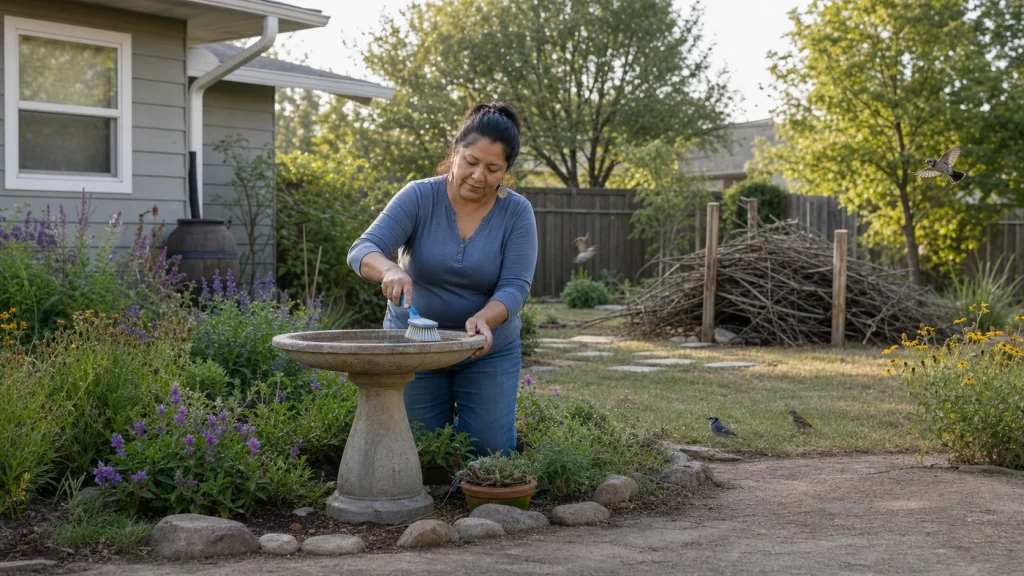
A shallow birdbath can be useful, especially during hot or dry weather, but standing water also becomes a mosquito nursery when it is ignored.
Use a container you can empty, scrub, and refill regularly. Keep it where you can see it, because a water source hidden behind the shed is easy to forget. Fix unintended standing water in clogged gutters, toys, tarps, and plant saucers rather than counting it as habitat.
Create shelter away from the house
A small brush pile, leaf layer, dense shrub, or dead wood can shelter insects and small animals. Placement matters.
Keep habitat features away from siding, crawl-space openings, dryer vents, and frequently used walkways. You want wildlife using the yard, not moving into the attic. Local fire guidance may also limit brush, leaf litter, or vegetation near structures in wildfire-prone areas.
Reduce harm before adding accessories
A birdhouse is visible, but some of the most valuable changes are less decorative. Reduce broad pesticide use, prevent outdoor cats from hunting, make large windows more visible to birds, and leave some seed heads or leaves where they don’t create a safety problem.
Do not feed animals such as deer, raccoons, bears, or coyotes. Feeding can concentrate animals, spread disease, damage neighbors’ property, and teach wildlife to approach people. Secure trash, pet food, and fallen fruit so your habitat doesn’t become an accidental feeding station.
Watch how wildlife uses the changes
Add one or two changes, then watch for a season. Notice what blooms, what gets eaten, where water collects, and which visitors actually arrive.
A wildlife-friendly yard doesn’t have to look wild everywhere. It can have deliberate edges, clear paths, and maintained spaces for people alongside pockets that feed and shelter other living things. Choose changes you can maintain and that leave the yard useful for your household too.