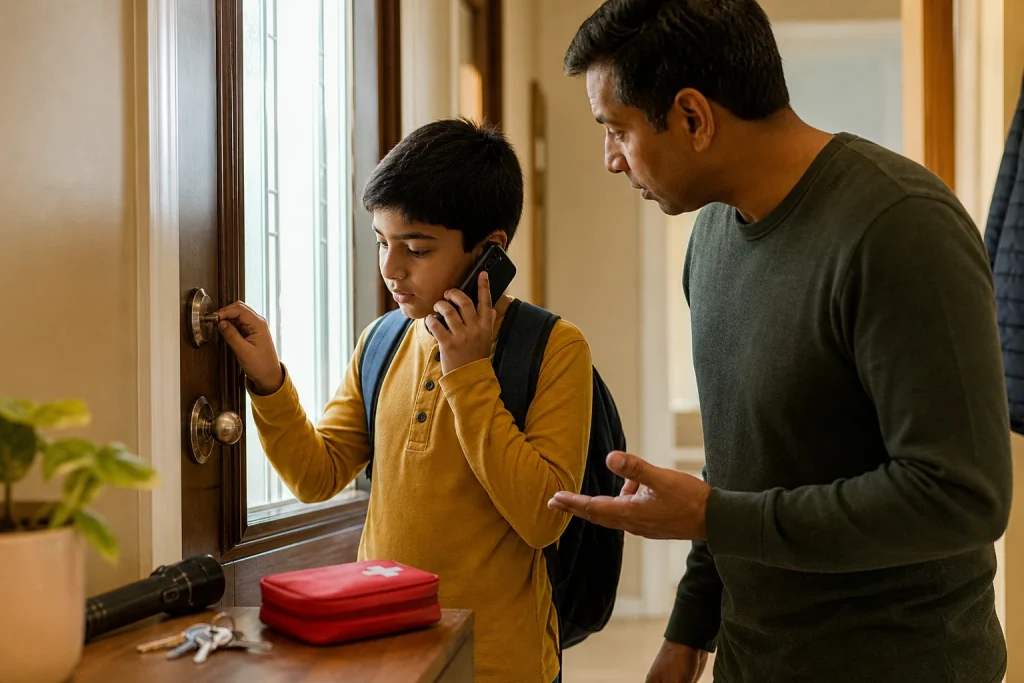
Is Your Child Ready to Stay Home Alone? Use a Readiness Test, Not Just an Age
Parents often ask for the age when a child can stay home alone because a number feels decisive, but a birthday doesn’t teach a child what to do when the smoke alarm sounds, a stranger knocks, or the parent who promised to answer the phone doesn’t pick up.
Readiness should be demonstrated through judgment, comfort, emergency skills, and short practice runs – not assumed from age alone. You also need to check your state or local law because minimum-age rules and neglect standards vary.
Ask your child before you test your child
A child who is frightened by the idea isn’t ready simply because a sibling was ready at the same age. Ask how they feel about being alone, what worries them, and what they imagine doing during that time.
The American Academy of Pediatrics says families should consider maturity, location, nearby support, distance from the parent, and the child’s comfort. Its home-alone readiness guidance also recommends checking local rules before making a plan.
Use scenarios instead of “Do you know what to do?”
Most children will say yes to a general question. Give them a situation and ask them to talk you through it:
- The power goes out.
- Someone knocks and says they need help.
- The smoke or carbon monoxide alarm sounds.
- You do not answer the phone.
- They get locked out.
- A sibling is injured or refuses to follow a rule.
You aren’t looking for a perfect speech. You are looking for whether the child remembers the rule, recognizes when an adult is needed, and can act while stressed.
Build a support system that can physically arrive
Your phone is important, but it isn’t the whole safety plan. Identify a trusted adult nearby who knows the child may be alone and can get to the home if you can’t.
Post the home address, emergency contacts, 911 guidance, and the nearby adult’s information where the child can find it. Confirm that smoke and carbon monoxide alarms work, show where flashlights and first-aid supplies are kept, and decide whether cooking, bathing, going outside, or having friends over is allowed.
Practice the exact version you plan to use
Start with a brief trip nearby at a predictable time of day. Make the first trial easier than the eventual arrangement: no younger sibling to supervise, no stovetop cooking, no expected delivery, and no hour when the child is usually tired or anxious.
Have the child check in, then talk afterward about what felt comfortable and what didn’t. A successful 20-minute trial is evidence for the next small step, not permission to jump immediately to an entire afternoon.
Readiness can change with the situation
A child who can manage an hour after school may not be ready late at night, during severe weather, while sick, or while responsible for younger children. The question is always readiness for this situation, not a permanent status the child earns once.
If your child freezes during scenarios, repeatedly breaks essential safety rules, feels afraid, or has needs that make the plan unsafe, wait and build the missing skills. Give your child chances to practice with support before expecting them to manage those situations alone.