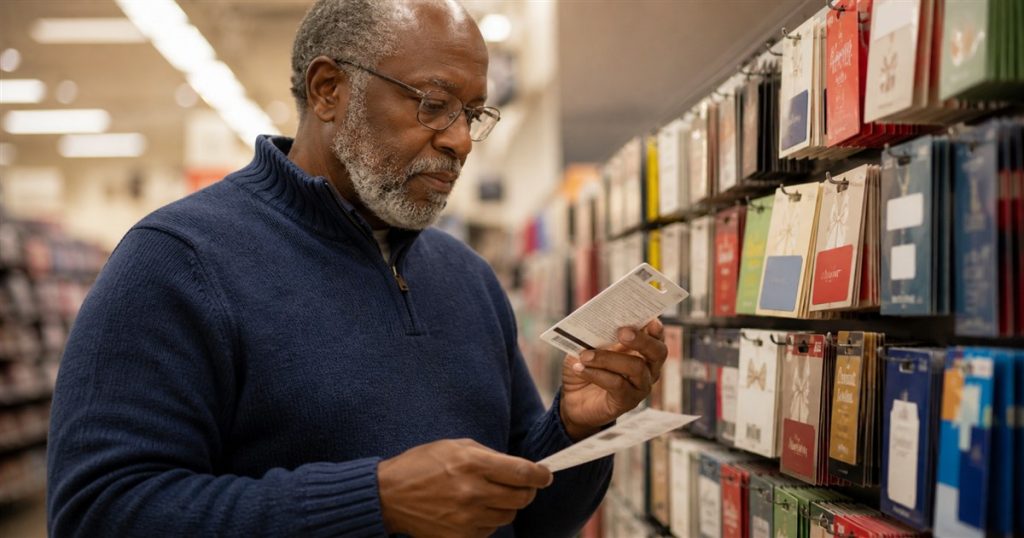
How Do You Buy a Gift Card Safely?
You can buy a gift card safely, but treat the card like cash before and after you pay for it. Choose a card the recipient can use, inspect the packaging and PIN area, understand the terms, keep the receipt, and never share the card number with anyone who told you to buy it as a payment.
First, make sure it is really a gift
If someone on a call, text, email, or social platform directs you to buy a particular gift card and send the number or PIN, stop. The Federal Trade Commission says gift cards are for gifts, not payments, and no legitimate business or government agency will demand payment that way.
Urgency is part of the trap. The person may claim to be a relative, government employee, utility company, tech-support worker, prize administrator, or romantic interest. Do not solve the story while the caller controls the pace. End the contact and verify the situation through a number or account you found independently.
Match the card to the recipient’s real use
A card is only useful if the recipient can spend it without turning the gift into a project. Check whether it works online, in stores, or both; whether it is limited by location; whether shipping, tips, subscriptions, or split payments create problems; and whether the balance expires or fees reduce it.
For a store-specific card, make sure the recipient actually uses that store. For a general-purpose card, read the activation and usage terms. Do not assume every card behaves like a debit card merely because it carries a familiar payment-network symbol.
Inspect the card before money goes onto it
- Buy from a business you know rather than an unknown reseller or auction listing.
- Check that packaging, stickers, and the PIN covering are intact.
- Reject a card with scratches, exposed numbers, replacement labels, or signs that it was opened.
- Ask the cashier to confirm that the number on the activation receipt matches the card you are taking.
A card hanging neatly on a rack can still have been tampered with. The inspection is not about proving fraud; it is about refusing a card whose chain of custody already looks uncertain.
Create a recovery record without exposing the gift
Keep the store receipt and a separate record of the card, but store them where another person cannot immediately use the number. Give the recipient any activation receipt or instructions they may need. Encourage them to register the card if the issuer offers a legitimate registration process and to check the balance through the issuer’s official site or phone number.
If the card is lost, drained, or used in a scam, contact the issuer immediately and ask what can be stopped or recovered. Keep the card and receipt available, and report fraud to the FTC. Recovery is not guaranteed, but the record gives the issuer something concrete to investigate.
Use one final pause at checkout
Before paying, ask: Who is this for, how will they use it, and did anyone pressure me to send the numbers? If the first two answers are clear and the third is no, you are probably making an ordinary gift purchase. If a story or caller is directing the transaction, step out of line and run the broader calm scam check before sending money or information.
A safe gift card is not just a card that activated. It is a card with an intact path from a trusted seller to the person you intended to help.