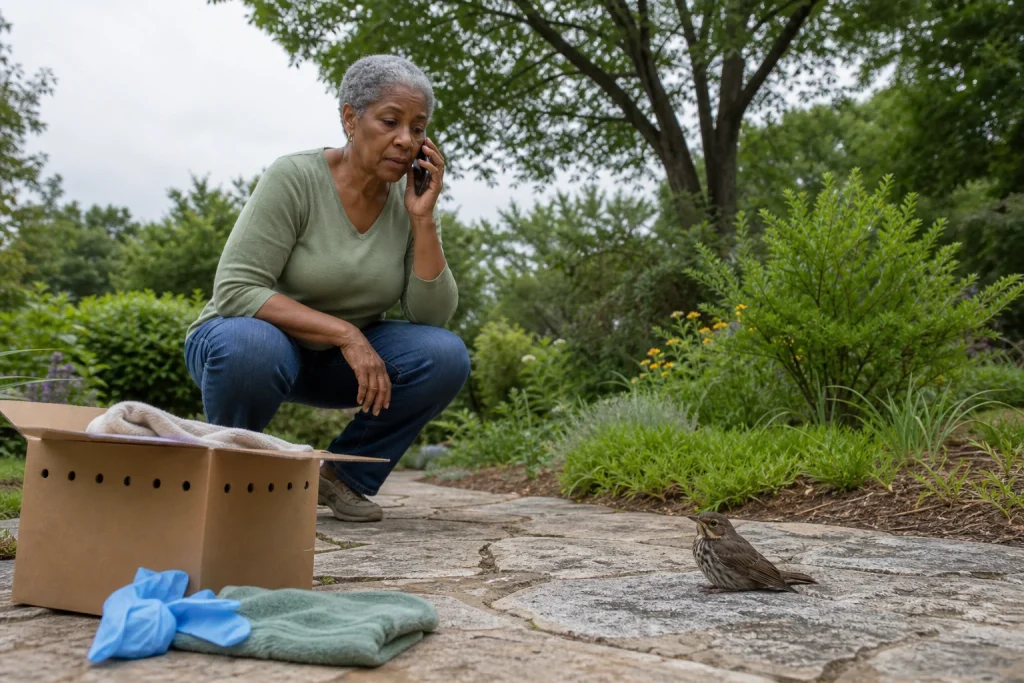
What Should You Do If You Find an Injured or Orphaned Wild Animal?
Finding a young bird on the ground or an animal sitting unusually still can make doing nothing feel cruel, but with wildlife, acting quickly isn’t always the best way to help.
Your first step should usually be to create distance, keep children and pets away, and observe before touching or feeding the animal. Many young animals are left alone while a parent finds food, and human presence can keep that parent from returning.
Look for evidence of injury, not helplessness alone
A baby animal may be quiet, awkward, or alone without being abandoned. A fledgling bird may spend time on the ground while learning to fly, and a young mammal may remain hidden for hours between visits from its mother.
Visible bleeding, a broken limb, severe shivering, weakness while lying on its side, fly eggs, a known attack by a pet, or a dead parent nearby changes the situation. The U.S. Fish and Wildlife Service advises contacting a licensed wildlife rehabilitator when an animal shows clear injury or is truly orphaned, while its guide to injured and orphaned wildlife explains why most apparently unattended young animals should be watched from a distance.
Call before you capture or transport
Wildlife rehabilitation is regulated, and permitted rehabilitators may accept only certain species. Call your state wildlife agency, local animal control, or a licensed rehabilitator, describe what you see, and ask what they want you to do.
Do not assume a veterinary office can accept wildlife without calling, and don’t place an animal in your car first and start making calls later, because transport may add stress or expose you to bites, scratches, parasites, or disease.
Do not feed it while you wait
Offering water, milk, bread, seeds, or pet food feels nurturing, but the wrong food or feeding method can injure or kill a wild animal. A frightened or weakened animal can also aspirate liquid into its lungs.
If a rehabilitator instructs you to contain the animal, follow those exact directions. Otherwise, keep your distance and reduce noise, handling, photographs, and attention.
Special situations need different responders
Never handle a bat with bare hands, especially when a person or pet may have had contact with it; call animal control or your public-health authority for exposure guidance. Marine mammals, birds of prey, protected species, animals in roadways, and wildlife acting aggressively may require a state or federal agency rather than a general rehabilitator.
If a domestic cat or dog attacked the animal, say so when you call even if no wound is obvious. Punctures can be difficult to see, and the rehabilitator needs that information.
Helping sometimes means protecting the reunion
Suppose you find a feathered young bird hopping under a tree. If it can move, grip, and has no visible injury, moving people and pets away may give its parents the chance to continue caring for it.
You can help without picking the animal up. Give it a chance to stay with its parents when appropriate, and follow qualified advice when it needs care so your attempt to help doesn’t add stress or cause harm.