Can You Take Two Over-the-Counter Medicines Together? Check the Active Ingredients First
Two medicine boxes can have different brand names, different colors, and different promises on the front while containing the same active ingredient. That is how someone treating a headache and a cold can accidentally take more of one drug than they intended.
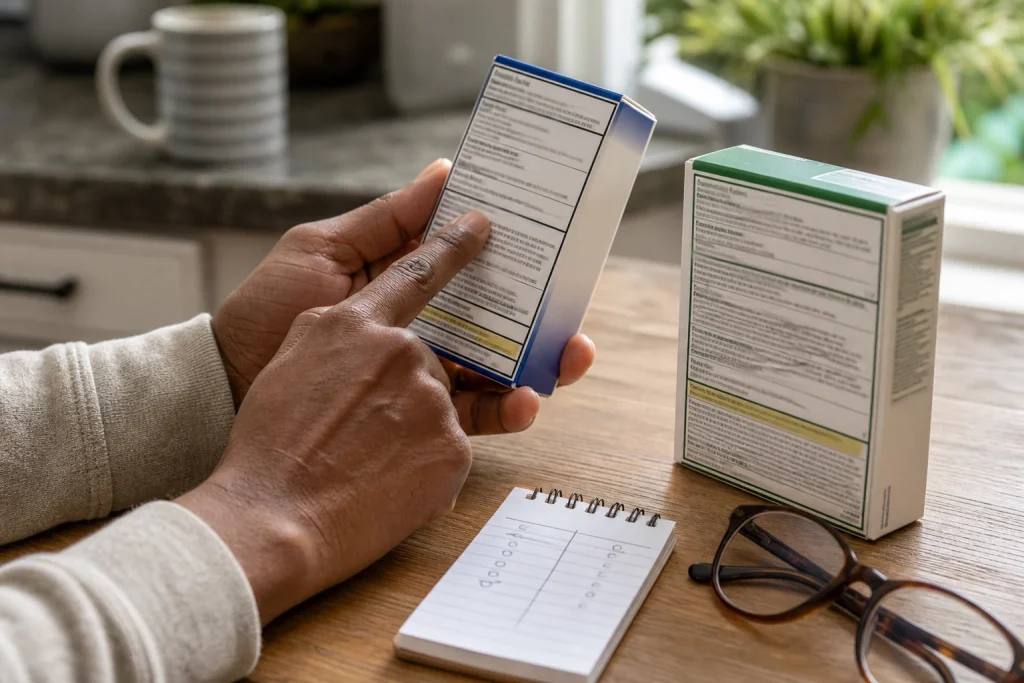
Before taking two over-the-counter medicines together, compare the active ingredients, dose, warnings, and directions on both Drug Facts labels. Do not decide from the brand name or the symptom list on the front of the package.
Read the label in the order that prevents duplication
- Find the Active ingredient section on each product.
- Write down the amount in each dose.
- Check the Purpose and Uses so you know what each ingredient is doing.
- Read the Warnings, including conditions, medicines, foods, or alcohol that may create a problem.
- Compare the Directions, including how often and how long the medicine may be used.
The FDA’s guide to the over-the-counter Drug Facts label explains that every OTC label presents this information in a standard order. Once you know where to look, you can compare what is inside instead of relying on package design.
Combination products hide the duplication most easily
A product labeled for “cold and flu,” “nighttime relief,” or “sinus and headache” may contain several active ingredients. Adding a separate pain reliever, antihistamine, cough medicine, or sleep aid can duplicate one of them even though the second box appears to treat a different problem.
Acetaminophen is a common example because it appears in hundreds of prescription and nonprescription products. The FDA warns consumers to check every label and avoid taking more than one OTC medicine containing acetaminophen at the same time unless a healthcare professional has advised it.
Different ingredients can still interact
No duplicated ingredient doesn’t automatically mean the combination is safe for you. Medicines can interact with one another, alcohol, food, supplements, pregnancy, and health conditions such as high blood pressure, kidney disease, diabetes, ulcers, or liver disease.
The FDA’s drug-interaction guidance recommends discussing prescription drugs, OTC medicines, vitamins, herbs, and supplements with your healthcare professionals. A pharmacist is especially useful when you need a real-time check before combining products.
Ask the pharmacist a complete question
Do not ask only, “Can I take these together?” Show the exact products and explain your age, symptoms, health conditions, allergies, pregnancy or breastfeeding status, and every prescription, OTC medicine, vitamin, and supplement you use.
If the medicine is for a child, use the child’s age and weight and the exact child-specific label. Children aren’t simply smaller adults, and a familiar adult product may not be appropriate.
Know when self-treatment should end
Follow the label’s stop-use and seek-care instructions. Get urgent help for trouble breathing, swelling of the face or throat, fainting, severe confusion, a suspected overdose, or another serious reaction; in the United States, Poison Control is available at 1-800-222-1222, and emergencies require 911.
The safest comparison happens on the back of the box. Brand names tell you how a product is sold, while active ingredients tell you what your body is actually receiving.