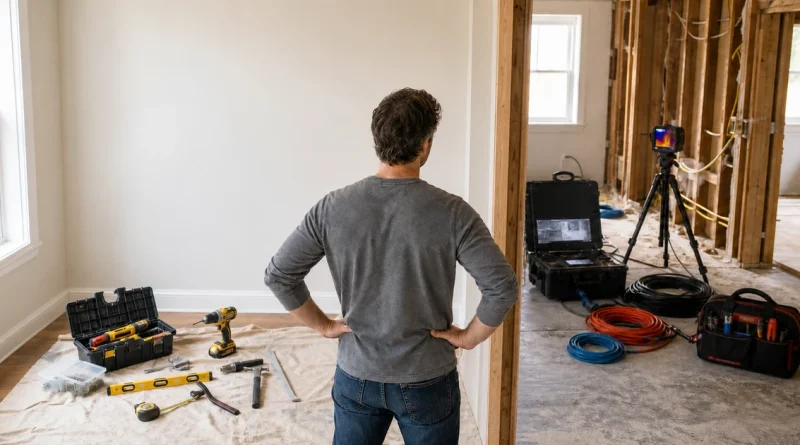
DIY or Hire a Professional? How to Make the Call Before Starting
The videos make a project look manageable, the tool rental seems affordable, and doing it yourself could save a lot of money. The part that's harder to see is what happens if the first attempt fails behind a wall, under a floor, or after the weather changes.
DIY can be a smart choice when the hazard is low and mistakes are reversible, but you should hire qualified help when failure can injure someone, damage the building, violate code, or cost more than the labor you saved. In those cases, hiring isn't an admission of defeat; it's part of controlling the risk.
Rate the consequence of failure
Cosmetic paint and a simple shelf do not carry the same risk as structural work, roofing, gas, electrical service, major plumbing, or waterproofing.
Ask what happens if the work fails slowly and remains hidden. Water and electrical problems can cause extensive damage before they become obvious.
Check permits and regulated hazards
Ask the local building authority whether permits, inspections, or licensed trades are required. Insurance, warranties, associations, and landlords may add separate conditions.
Homes built before 1978 may contain lead-based paint. The EPA's DIY renovation guidance explains that renovation can create dangerous lead dust and recommends certified contractors for covered work.
Suspected asbestos, mold contamination, sewage, structural instability, and other hazards may require qualified assessment.
Count the complete DIY cost
Include tools, safety equipment, delivery, disposal, permits, material waste, rework, lost time, and the cost of living with an unfinished space. Specialty tools used once can erase expected savings.
Price the professional alternative using the same scope. A contractor quote may include insurance, supervision, cleanup, warranty, and equipment that DIY estimates omit.
Test skill on the critical step
Watching a demonstration is not the same as performing the work under the conditions in your home. Identify the hardest irreversible step and ask whether you can verify it before it is covered.
Practice on scrap or a small noncritical area where possible. Do not make the house the first test of a dangerous technique.
Consider time and interruption
Estimate the project in working hours, then include learning, shopping, cleanup, delays, and correction. Decide whether the space can remain safely out of service.
A project that saves money but disables the kitchen for a month may not fit the household.
Use a hybrid approach
An owner can handle planning, clearing the area, finish selections, painting, or cleanup while a professional performs permitted or high-risk work. Agree on responsibility and warranty before dividing the scope.
Do not assume a contractor will warrant work installed over an owner-prepared surface.
Stop when conditions change
Set stop points before beginning. Hidden wiring, rot, leaks, unexpected framing, hazardous material, or a scope beyond the permit should trigger reassessment.
DIY isn't a test of character. The successful choice is the one that gives you a safe, legal, durable result without turning the savings into unmanaged risk.