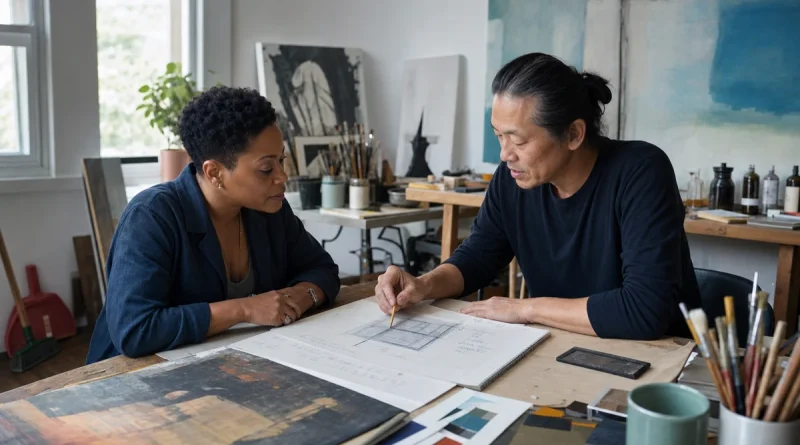
How to Commission an Artist for the First Time Without Costly Misunderstandings
Hiring an artist for the first time can feel strangely personal. You are asking someone to turn an idea in your head into something visible, and you may not know the vocabulary needed to explain it.
You do not need to direct every brushstroke. But you should agree on the purpose, scope, review process, price, and rights before the artist begins.
Start with what the artwork needs to do
Tell the artist where the work will be used, who will see it, the physical or digital size, your deadline, and the feeling you want it to create. A portrait intended as a family gift is a different assignment from an illustration that will appear on product packaging.
References help when you explain what you like about them. "I like the warm colors and quiet mood" is more useful than sending five unrelated images and asking the artist to make something similar.
You should also say what must not appear. That can include a color, symbol, background element, pose, or visual style that would make the finished work unusable.
Choose the artist for the work, not only the price
Look for completed pieces that resemble the type of work you need. An artist can be talented and still be the wrong fit if the commission requires a medium, subject, or production process that is not represented in the portfolio.
Ask whether the examples are commissioned work and what part of each project the artist completed. This matters when a portfolio includes collaborative work, animation, or design assembled by several people.
Put the commission terms in writing
A useful written agreement should identify the finished work, price, deposit, payment dates, estimated schedule, number of revision rounds, delivery format, cancellation terms, shipping responsibilities, and what happens if the project changes.
Do not assume a revision means an unlimited restart. You should ask when you will approve the sketch or concept, what can still change after that approval, and what additional work will cost.
For a physical piece, confirm dimensions, materials, framing, packaging, shipping, insurance, and who carries the risk if the work is damaged in transit. For digital work, confirm file dimensions, resolution, color mode, and formats.
Separate ownership of the object from copyright
Buying a painting or receiving a digital file does not automatically transfer every copyright right. The artist generally owns copyright unless rights are transferred or the work qualifies under a specific legal arrangement.
The U.S. Copyright Office copyright overview explains that copyright includes separate rights such as reproduction, distribution, and adaptation. You should state whether the work is for private display, a business website, advertising, merchandise, resale, or another commercial use.
If you need exclusivity, editing rights, or ownership of copyright, say so before the quote is finalized because broader rights can affect the price. Do not rely on "I paid for it" as a substitute for a clear license or written transfer.
Review progress at the stage when changes are still practical
Many commissions include a concept or sketch approval before detailed work begins. Use that checkpoint to verify composition, subject details, text, proportions, and other structural choices.
Do not wait until final delivery to mention a problem that was visible in an approved sketch. And do not pressure the artist to produce finished detail before you have approved the direction, because both approaches create avoidable rework.
A simple commission brief
Before contacting an artist, write down:
- what you want created and why
- where and how it will be used
- required size, medium, and file or delivery format
- deadline and any fixed milestones
- visual references with notes about what you like
- required and prohibited elements
- budget range
- rights or license you need
- the person who can approve the work
The right artist should reduce uncertainty by asking useful questions. A commission is ready to begin when both of you can describe the same finished result, the same approval process, and the same rights without filling gaps with assumptions.