How to Buy or Sell Through Classified Ads Without Ignoring the Warning Signs
Classified listings can connect buyers and sellers quickly, but the short format also makes it easy to omit identity, condition, total cost, delivery terms, or proof that the item exists. A familiar marketplace logo doesn’t guarantee that the individual listing or payment request is safe.
You should keep communication, payment, and dispute protection inside the marketplace when possible and verify expensive items independently before money moves.
Evaluate the listing before contacting the seller
Look for photographs of the actual item from several angles, a specific description, location, model or serial information, condition, included accessories, and a price that makes sense for the market. Search distinctive phrases and images when a listing may have been copied.
Ask questions whose answers would be difficult to fake from a stock description. You can request a new photograph showing a particular detail or ask the seller to explain damage, ownership history, operation, or missing documentation.
Verify identity and authority to sell
For vehicles, equipment, property, regulated goods, tickets, animals, and high-value items, confirm the documents and legal transfer process required in your location. Match the seller's identity to the ownership record when applicable.
Do not accept a story about selling for a traveling relative, deployed owner, estate, employer, or shipping company without independent evidence. Urgency and a complicated explanation often make normal verification seem inconvenient on purpose.
Use a payment method with real protection
The FTC online-marketplace guidance recommends reviewing marketplace protections, keeping written messages, and using safer payment methods. Protection may disappear if you pay outside the platform.
Do not pay with gift cards, cryptocurrency, a wire transfer, or an unexpected payment link merely because the seller offers a discount. Sellers should also verify funds inside their own account rather than trusting an emailed payment notice or screenshot.
The FTC warning for online sellers describes fake payments, overpayment checks, refund requests, and verification-code scams. Never send money back from an overpayment or share a one-time security code with a stranger.
Make an in-person exchange safer
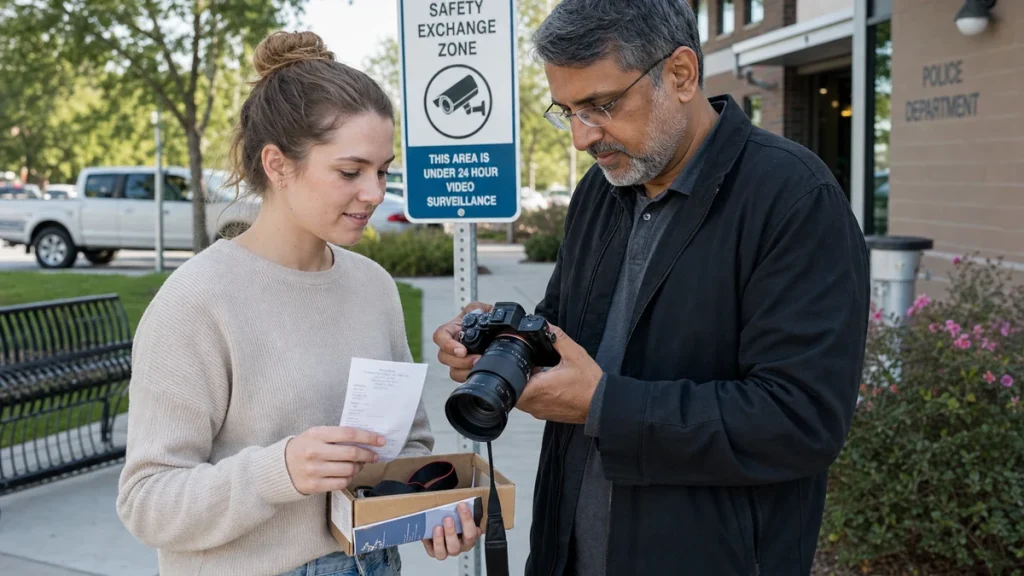
Meet during daylight in a public, monitored location appropriate for the item. Bring another person when practical, tell someone where you are, and don’t invite a stranger into a private home merely because the item is bulky.
For expensive or technical goods, arrange inspection at a qualified independent business. You should complete title transfer, bill of sale, payment verification, and delivery in an order that doesn’t leave either party without the item and the money.
Stop when the process changes unexpectedly
- The seller will not provide current photographs or identifying details.
- The price is far below comparable listings without a verifiable reason.
- Communication moves to an unrelated account or platform.
- A new person, courier, escrow service, or payment link appears.
- You are asked to pay before inspection or outside marketplace protection.
- A buyer sends too much money or requests a verification code.
- Pressure increases when you ask for ordinary documentation.
A legitimate classified transaction can still require caution, but it should become clearer as you ask reasonable questions. When every attempt to verify the deal produces a new exception, the uncertainty is telling you something useful.