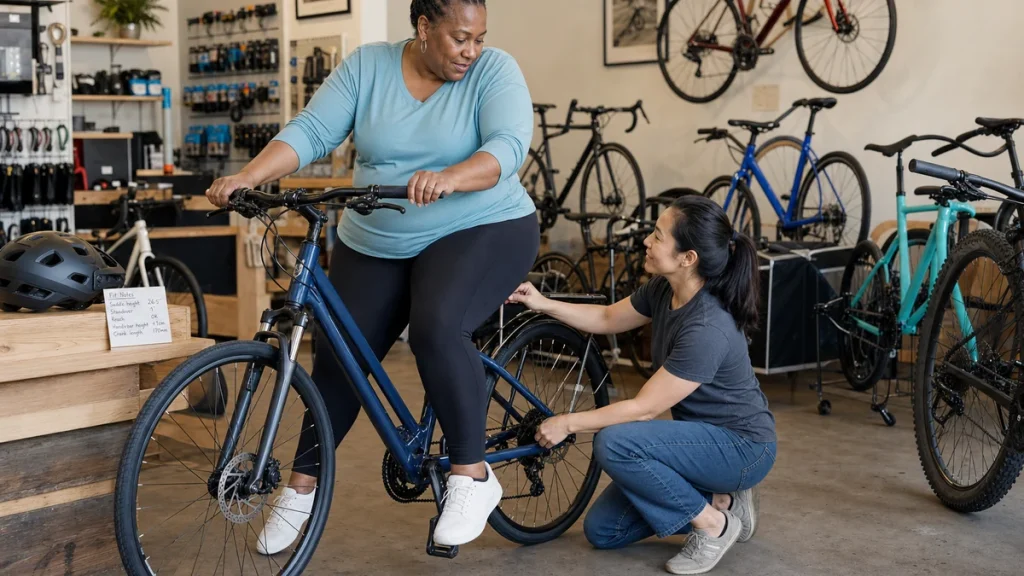
How to Choose the Right Bike Size and Type for the Way You Ride
Choosing a bicycle by wheel size or appearance alone can leave you with a bike that hurts to ride or doesn’t work well on your usual route. The right choice depends on fit, riding position, terrain, distance, cargo, maintenance, storage, and whether the bike has electric assistance.
You should test the type of riding you plan to do, not the version that looks most exciting in the shop.
Start with where and how you will ride
Describe your normal trip: paved streets, greenways, gravel, trails, hills, short errands, long fitness rides, or mixed surfaces. Include how often you will ride, whether you carry groceries or children, and whether stairs or limited storage affect the bike's weight and size.
A road bike, hybrid, mountain bike, cruiser, folding bike, cargo bike, and electric bike solve different problems. Wider tires and an upright position may be more useful for rough city streets than racing features you rarely use.
Treat the size chart as a starting point
Manufacturers measure frames differently, and two riders of the same height can have different proportions, flexibility, and comfort needs. You should stand over the frame, reach the controls comfortably, pedal without rocking your hips, and confirm that the shop can adjust the saddle and contact points.
Take a real test ride when possible. A lap around the showroom may reveal basic fit, but a longer ride is more likely to expose pressure, excessive reach, unstable handling, or gearing that doesn’t suit local hills.
Check assembly and safety equipment
Ask who assembled and inspected the bike, what adjustments are included after purchase, and where warranty work is performed. The Consumer Product Safety Commission bicycle FAQ explains federal requirements involving assembly, braking, reflectors, structural integrity, instructions, and labeling.
You should budget for a properly fitted helmet, lights, lock, repair kit, and any rack or cargo equipment needed for the way you will actually ride. A low bicycle price can become less attractive when basic safety and utility equipment are missing.
Evaluate an e-bike as an electrical product too
For an electric bicycle, ask about the battery manufacturer, the tested safety standard, the charger, the replacement-battery availability, the motor class, the range assumptions, the warranty, and the local riding rules. Range estimates change with rider weight, hills, temperature, assistance level, tires, wind, and cargo.
The CPSC micromobility safety guidance recommends compatible batteries and chargers, qualified repairs, attentive charging, and products certified to applicable safety standards. Do not buy a cheap replacement battery or universal charger simply because the connector fits.
Questions for the bike shop
- Which bike type fits my normal route and riding position?
- Why does this frame size fit me?
- Can I take a meaningful test ride?
- What assembly, fitting, and follow-up adjustments are included?
- What maintenance will the bike need during the first year?
- Are tires, brakes, gears, racks, and replacement parts readily available?
- For an e-bike, who services the electrical system and supplies batteries?
- What is the complete price with the equipment I need to ride safely?
A useful shop should be able to explain why a bike fits you without making discomfort sound like something every beginner must tolerate. You may need time to adapt to riding, but numb hands, knee pain, loss of control, and an unsafe reach are reasons to adjust the setup, not tests of commitment.