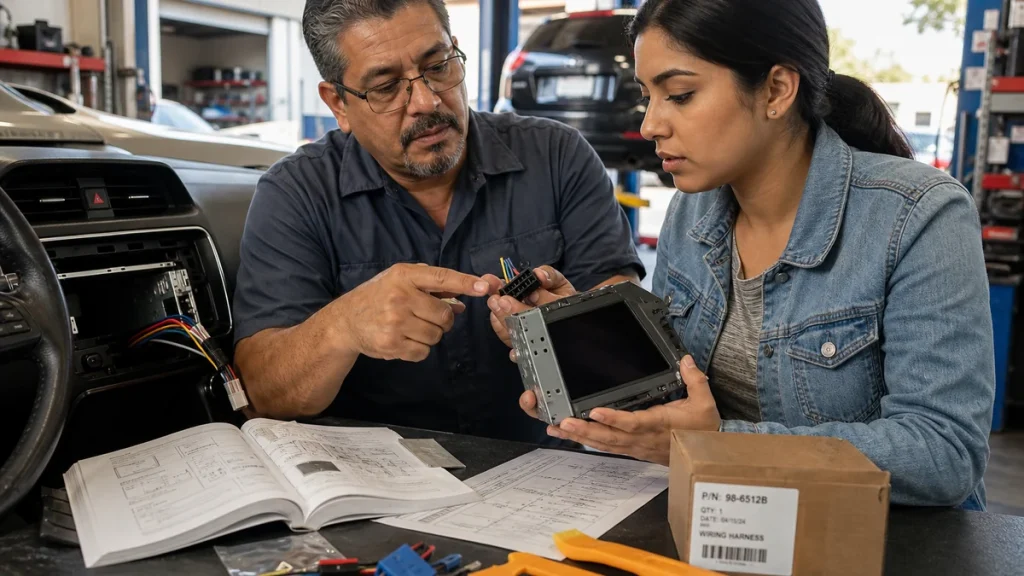
Will Aftermarket Accessories Affect Your Vehicle Warranty or Safety?
An aftermarket accessory can make a vehicle more useful, comfortable, or personal. It can also create warning lights, blocked sensors, electrical problems, poor crash performance, or a warranty dispute when the product and installation are treated as separate decisions.
You should evaluate the accessory, the vehicle, and the installer together. A product that physically fits isn’t necessarily compatible with the vehicle's electronics, safety systems, weight limits, or intended use.
Define the problem before choosing the product
Start with what you need the accessory to accomplish. A roof rack for occasional luggage, a rack for heavy work equipment, and a platform for a rooftop tent can look similar online while placing very different loads on the vehicle.
Write down the vehicle year, the make, the model, the trim, the body style, the engine, the drivetrain, and any factory packages that may matter. You should confirm compatibility against the exact configuration rather than relying on a marketplace filter that says "universal fit."
Check what the accessory may interfere with
Modern vehicles use cameras, radar, air bags, seat sensors, tire-pressure systems, driver-assistance features, and networked electronics. Ask whether the product or installation changes the operation, visibility, calibration, wiring, ventilation, ground clearance, lighting, or deployment area of any safety feature.
The National Highway Traffic Safety Administration adapted-vehicle guidance shows why modifications can require trained dealers, written documentation, fittings, and attention to affected safety standards. Your accessory may be much simpler, but the same principle applies: understand what changes before approving the work.
Do not accept a blanket warranty claim
An aftermarket product doesn’t automatically erase the entire vehicle warranty, but a manufacturer or warranty provider may deny a particular claim when it attributes the failure to the accessory or installation.
You should ask the vehicle manufacturer, accessory maker, installer, and service-contract provider what each one covers. Get the accessory warranty, the labor warranty, the exclusions, the required maintenance, and the claim procedure in writing.
If a salesperson says an accessory "will not affect the warranty," ask who pays if the dealer later blames it for a failed electrical module, water leak, damaged mounting point, or calibration problem. Confidence isn’t coverage.
Evaluate the installer as carefully as the accessory
Ask whether the installer has worked on your exact vehicle generation and whether installation requires drilling, splicing, coding, calibration, or permanent changes. Confirm who supplies replacement clips, seals, fasteners, fuses, or brackets and whether factory parts will be returned to you.
The final invoice should identify the product model, the serial number when applicable, the installation date, the labor performed, the settings or calibrations, and the warranties. You should also receive operating instructions and any new inspection or maintenance schedule.
Questions to answer before installation
- Is the product approved for this exact vehicle configuration?
- What load, voltage, clearance, or temperature limits apply?
- Could it obstruct or alter a safety system?
- Does installation require drilling, wiring changes, software, or calibration?
- Who covers damage caused by the product or labor?
- Can the accessory be removed without permanent damage?
- Are replacement parts and support likely to remain available?
- Does the change affect insurance, leases, inspections, or local law?
Look for an accessory that solves the problem you actually have. Before buying, confirm its compatibility, how it will be installed safely, and who will be responsible if it causes something to stop working.